03 · Greece — Four journeys. One trip.
Meteora and the Peloponnese — on the road again
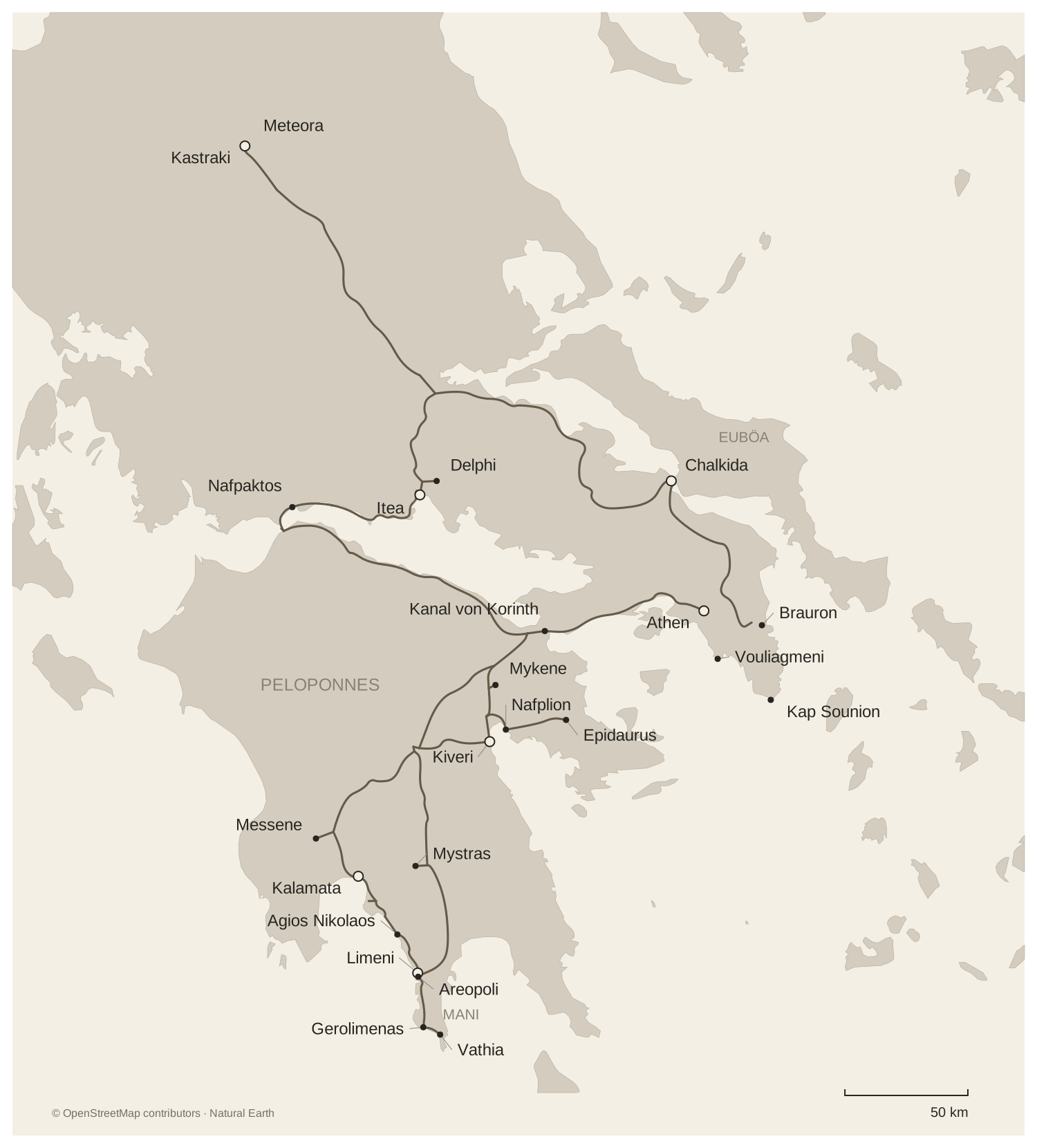
We collect our hire car in Athens. First we head north to the monasteries of Meteora, then south via Delphi to the Peloponnese.
Chalkida — meant to be just an overnight stop
As we arrive at the airport in the afternoon, we plan one night in Chalkida. Driving all the way to Meteora would mean getting there too late. Hunger still takes us down to the waterfront by the old bridge.
Mainland on one side, Euboea on the other. Between them, a narrow channel crossed by the bridge. For a mere overnight stop, it is a rather lovely setting for dinner.
We have read about the strong current reversing beneath the bridge. We do not see the reversal itself; that would have meant returning later. This time, dinner and the promenade are enough.
Meteora — at last, and then again
Two nights in Kastraki
We choose Kastraki, the smaller of the two towns at the foot of the rocks. Kalambaka is next door. We can see the rock faces from our apartment. The village has a church, tavernas, cafés and a good bakery. A very pleasant base for two nights.
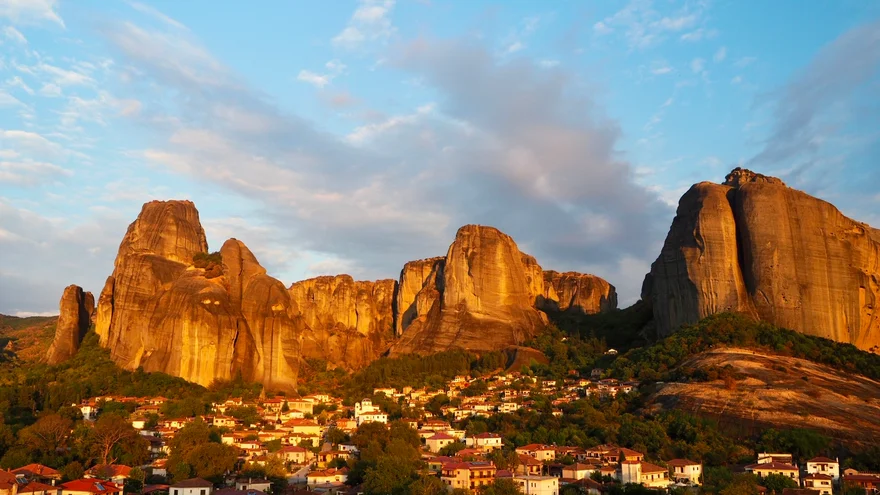
Our host Maria and her son Thomas supply information and have left several things for us in the apartment, including homemade jam and wine. Nearby is a little hill with a flag. In the evening, we watch the low sun turn the rocks orange from there.
Six monasteries, many viewpoints
After forty years on a wish list, a place could fail to meet expectations. Meteora does not.
The rocks alone would justify the journey. Then there are these monasteries on top. Walls, roofs and little courtyards on surfaces that hardly seem large enough to hold them. From below, some look almost unreachable. Once you are up there, the view opens towards the next rocks and the next monastery.
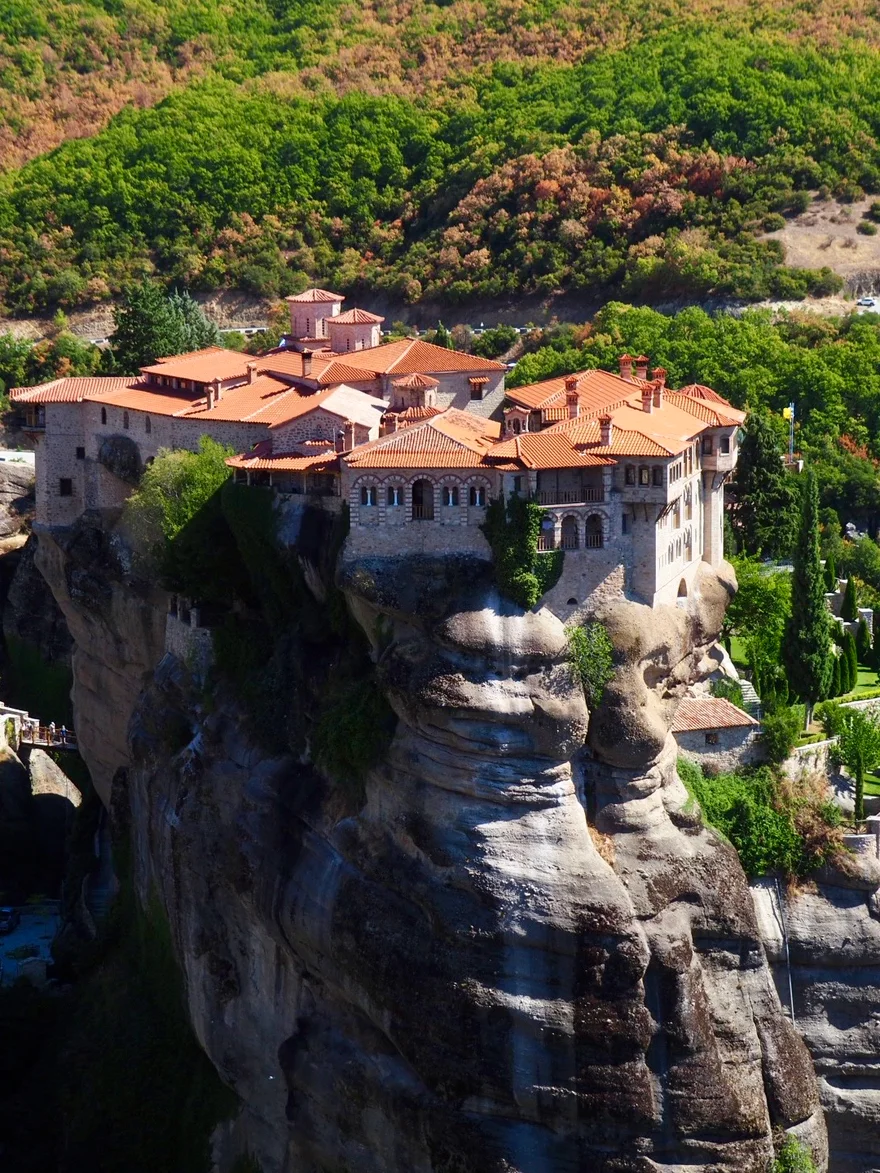
We drive the road linking the monasteries several times. Morning, daytime, sunset. Once more even on departure day. The same bends, the same rocks — and still we stop again.
We visit all six monasteries inside too. Each has its own setting and character. Churches with frescoes, glimpses of earlier monastic life, courtyards and terraces. Sometimes it is the view from a platform that stays with us most. It is worth seeing more than buildings in a landscape: the landscape from the buildings matters too.
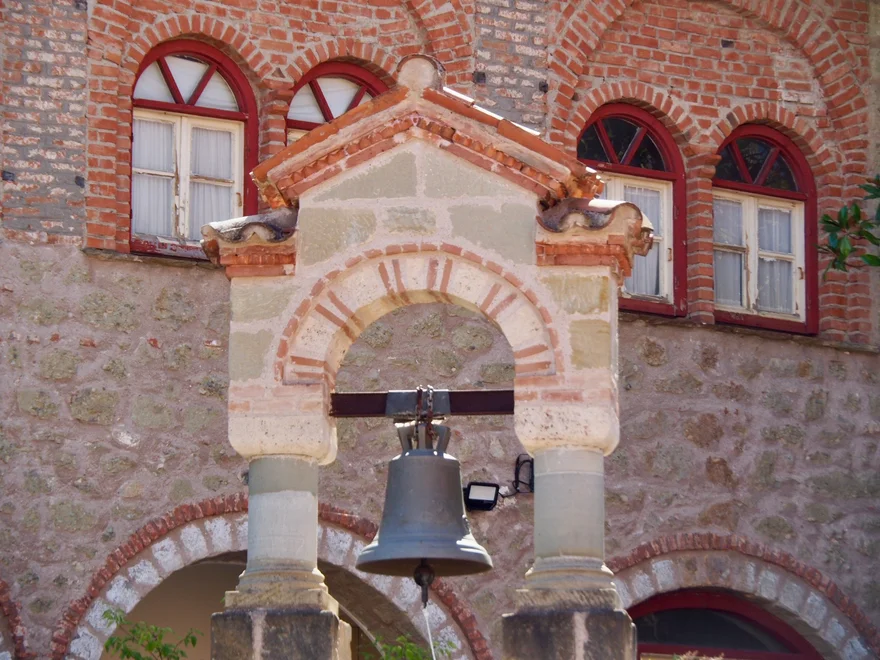
If we had to omit one, it would probably be Roussanou. The accessible area is small, and much is visible immediately outside the entrance. But we are glad we made time for all of them.
Parking is less difficult during our stay than we feared. Some monasteries have car parks; elsewhere, we find roadside space and walk a little. We have no reason to hurry from one monastery to the next.
At sunset, we look across the Pinios valley. The sun disappears behind the mountains beyond it, not behind a monastery. That does nothing to diminish the evening. After so many views of this landscape, we are more surprised that we still have not had enough.
Delphi — up the hillside
This stage includes a night in Itea. After Meteora’s rocks, we are beside the sea again. The town is an easy-going base for Delphi and a stop on the way to the Peloponnese.
Delphi is built on a slope. You feel it as you walk, and it is part of the effect. Between walls and columns, the landscape keeps opening up. You climb to the Temple of Apollo, then towards the stadium; separate ruins gradually form a larger picture.
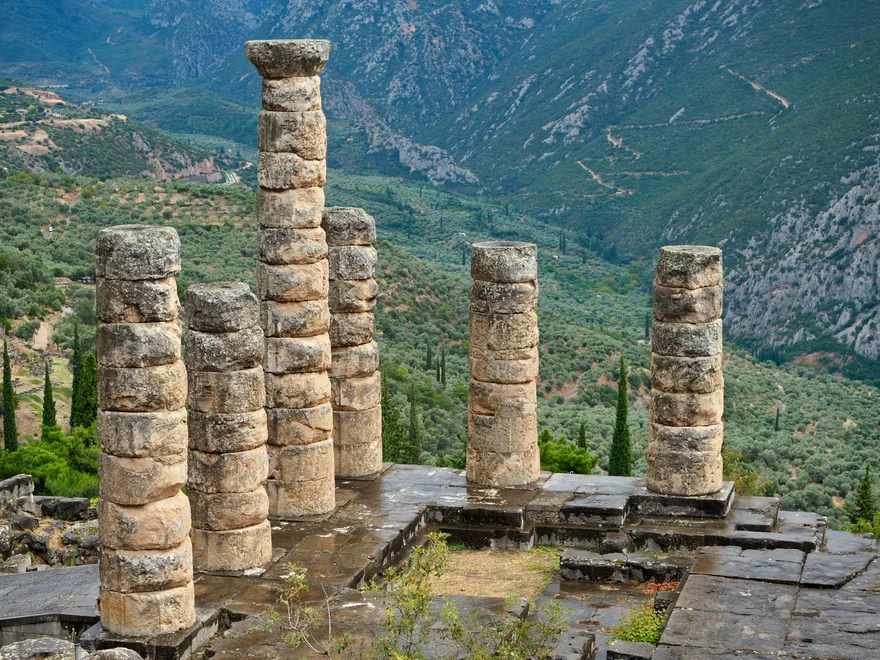
The oracle of the Pythia made Delphi somewhere people came for advice and reassurance about decisions. To the ancient Greeks, it was the navel of the world. Temples and treasuries grew around it; athletic and musical competitions took place here too.
With the audio guide in our ears, we see more than a succession of beautiful old stones. The buildings had functions, the paths led somewhere, and people and communities stood behind the offerings. The place regains something of its former weight.
We marvel at what was built here centuries before the Christian era. And at how powerful even the remains can be.
We also take away a question about the much-quoted Delphic maxims. “Know thyself” sounds familiar. We want to understand more precisely how these sayings connect with Delphi and how they reached us.
Nafpaktos — a harbour on the way
Before the bridge to the Peloponnese, we stop in Nafpaktos. The little harbour, its walls and the castle high above town take us by surprise. We walk through shopping lanes and sit down for coffee by the water.
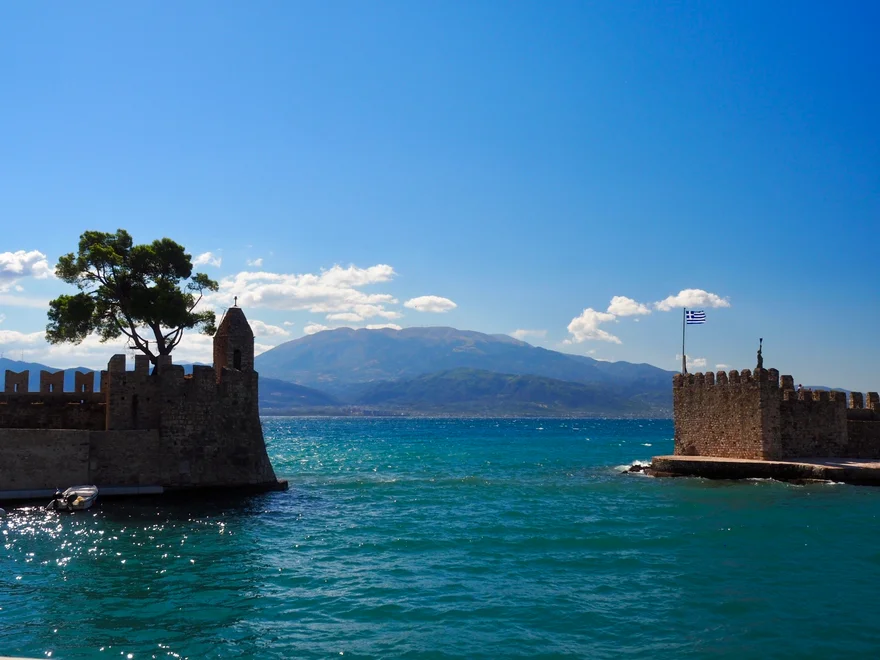
Then onward to the great bridge across the gulf. A definite change of scale after the small harbour basin.
From Kiveri to Mycenae and Epidaurus
A sea-view apartment and a very large bakery
We cannot find a suitable sea-view apartment in Nafplio, so we stay two nights in Kiveri across the bay. The little town has waterfront places to sit and lovely views. Mycenae, Epidaurus and Nafplio are within driving distance.
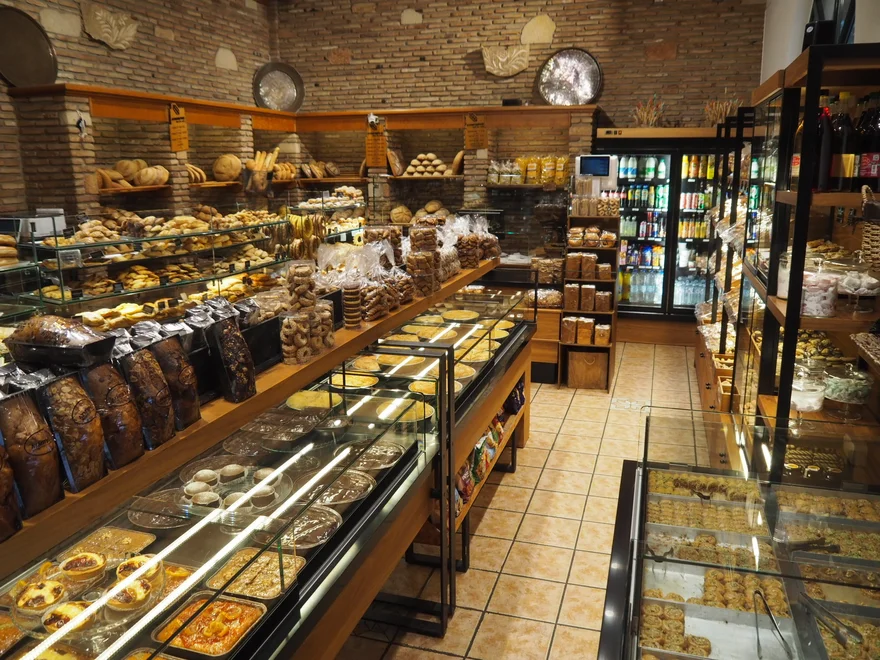
Another discovery waits at the entrance to town: a bakery whose size and range astonish us in such a small place. Bread, sandwiches, pastries, pâtisserie. And good coffee.
Mycenae — how old is this, really?
Mycenae unsettles our sense of time. We know we are in the Bronze Age, more than three thousand years ago. But what does that number mean when you stand before the things people made then?
In the museum, it is the jewellery above all. Pieces we would readily buy today from an artistically minded goldsmith. Their forms feel remarkably close to us. It takes the date on the label to remind us of the distance.
Outside, the scale changes. The enormous blocks of the Cyclopean wall and the Lion Gate make us marvel in another way. A moment ago, we were looking at fine work on a small object; now we think about moving and fitting these stones together.
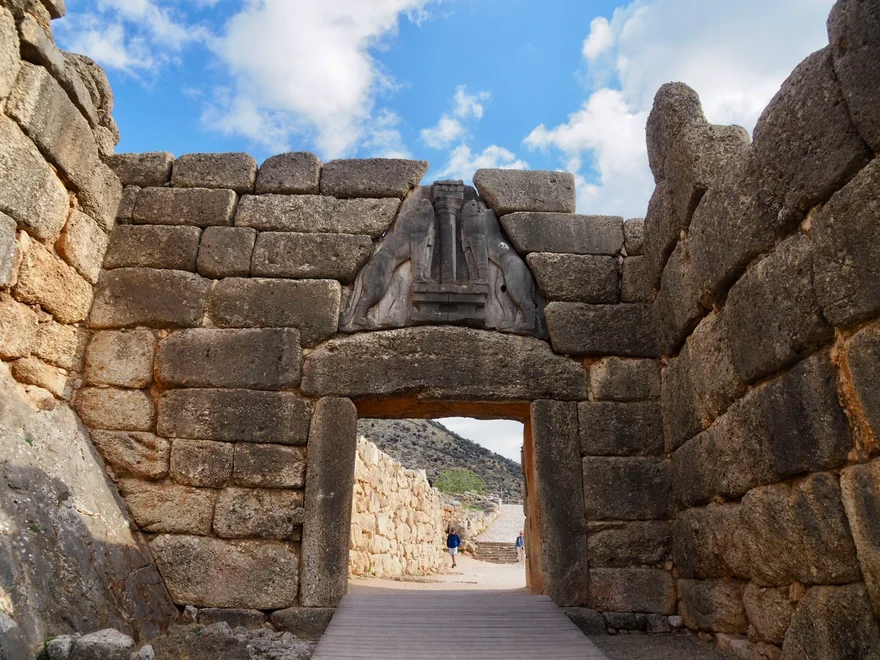
That is what really unsettles us about Mycenae: how remote its world is in time, and how immediately some of it speaks to us.
Epidaurus — a sanctuary beyond the theatre
The theatre dominates our first impression of Epidaurus. Its broad, steeply rising rows of seats are impressive even in photographs. Here, their scale becomes physical as you climb among them and look down again.
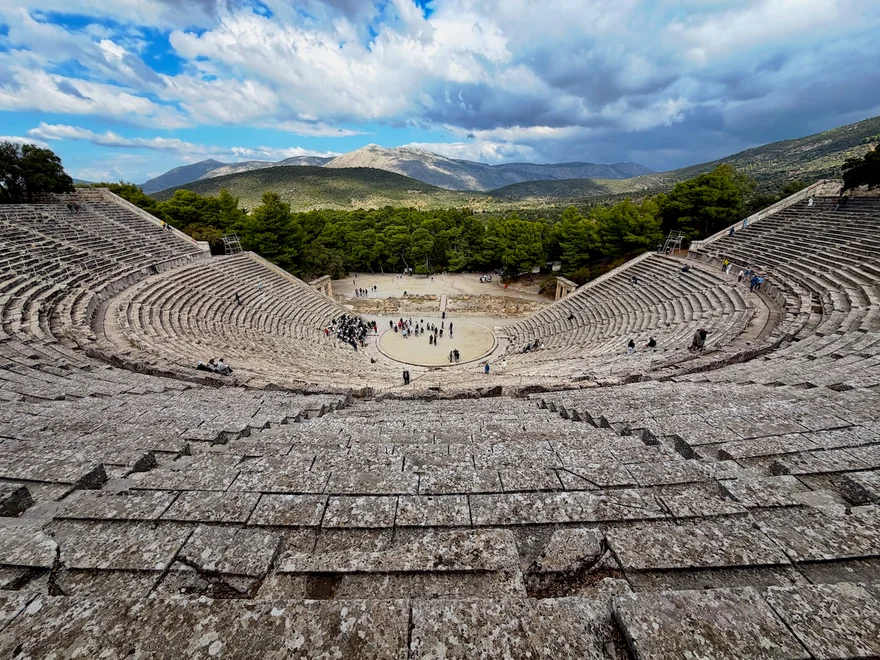
But the site is more than its theatre. Below lies the Sanctuary of Asclepius, an ancient place of healing. Walking through the extensive grounds, we try to imagine people arriving in search of help. That changes the ruins. Between these buildings, daily life was shaped by illness and hope as well as worship.
Nafplio — beautiful without the superlative
Later, we are in Nafplio. Perhaps the most beautiful town in Greece, some guidebooks say. We would not go quite that far, although we have just come from a series of very beautiful island towns.
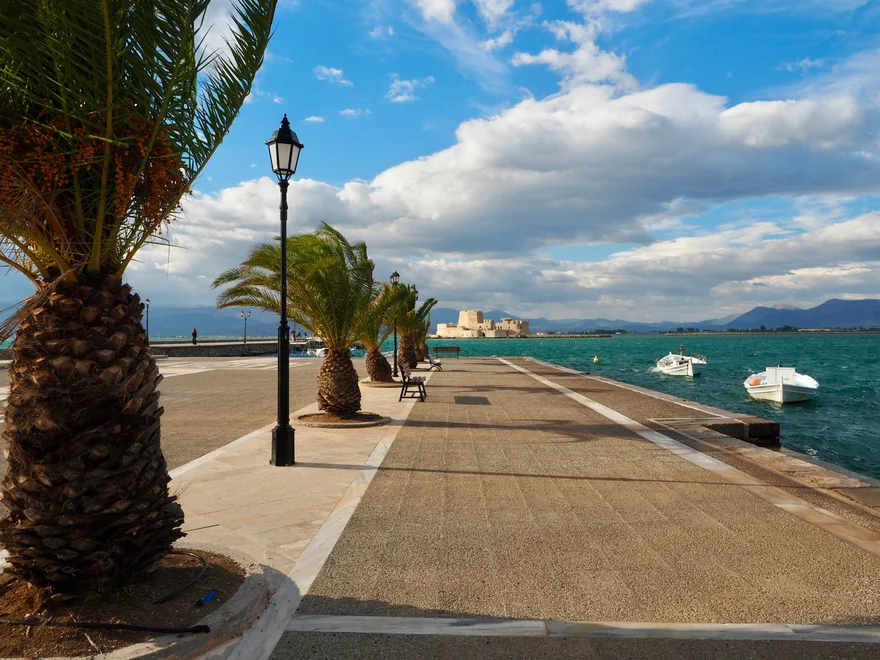
We like Nafplio: broad lanes of polished stone, boutiques, restaurants, the fortress above town. Large yachts in the harbour, the Bourtzi fortress on a little island beyond. A pleasant place to wander. We need not decide whether it is the loveliest to enjoy it.
Mystras — a city on a slope
Mystras belongs to a different historical world from the excavations of recent days. Here we stand in a ruined Byzantine city. Churches, monasteries, palaces and abandoned houses climb the hillside, with the fortress above.
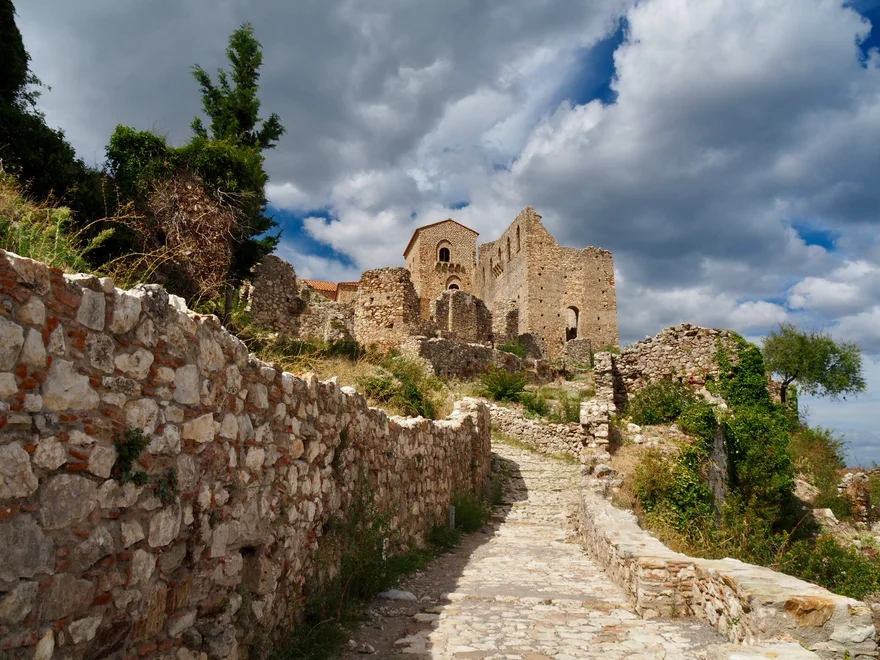
You walk between buildings, look through arches, climb further and find another church. Much still has walls and roofs; some is ruin. That makes the city imaginable in a different way from a site where foundations mark out streets and houses.
For us, Mystras is, above all, beautiful. It needs no grand thesis to hold our attention. The hillside ensures that we remember the visit physically too.
The Mani — small windows above a great bay
Staying above Limeni
Our next accommodation is high above Limeni Bay, near Areopoli. Terraces, glass balustrades, two pools, modern and very well equipped inside. The view is extraordinary.
At some point, Angie notices something: it is surprisingly dark indoors. The windows are small.
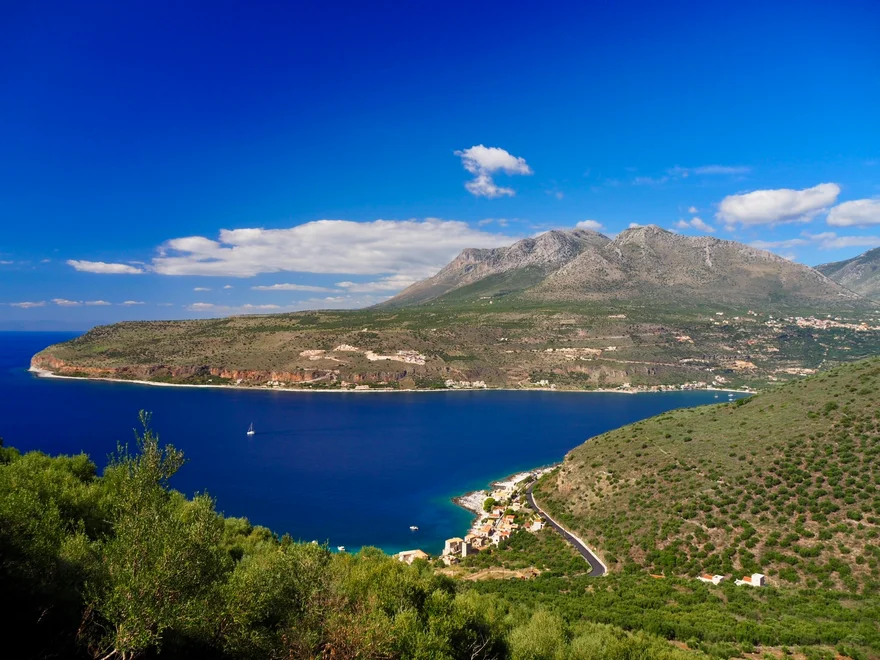
We cannot tell for certain whether the house has been superbly renovated or newly built. We suspect the latter. The next day, we drive through the Mani and read about the region’s history. Angie’s observation acquires a context we had not seen before.
Areopoli, Gerolimenas and Vathia
In Areopoli, stone houses and towers line paved lanes. Further south, the landscape becomes sparse and the coast steep. Roads thread between mountains and sea through a region whose architecture looks heavy and defensive.
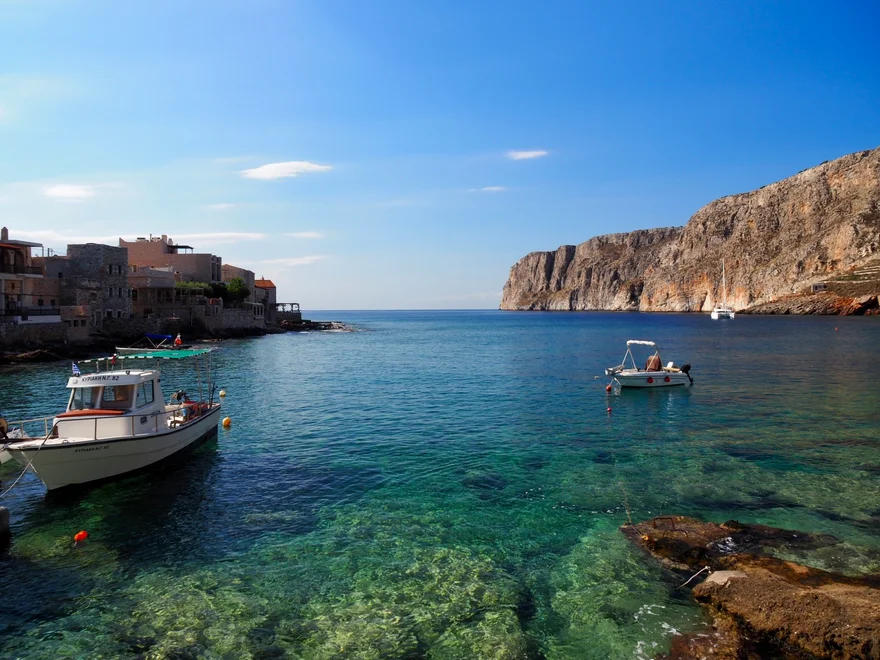
In Gerolimenas, boats lie before stone houses, with a sheer rock face opposite. The water at the little pebble beach is turquoise. Cafés and tavernas invite us to stay.
Vathia concentrates the image of the Mani. Towers crowd together on a hill. The place looks largely abandoned. From a distance, it is an impressive subject for a photograph; with some knowledge of the region’s family feuds, it also becomes an architecture of protection and separation.
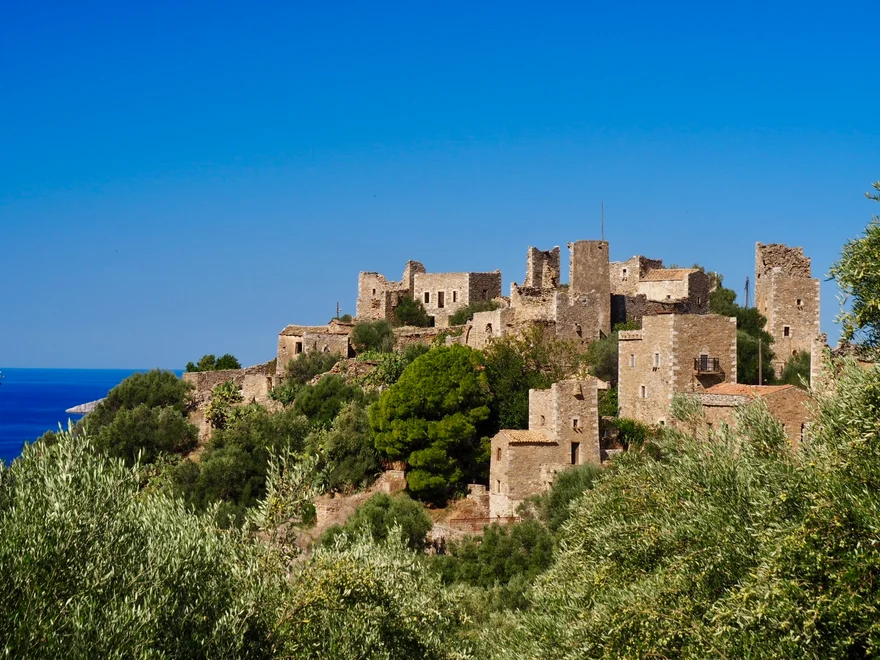
Reading about the towers and their small openings, we think back to our accommodation. We are staying comfortably in architecture whose predecessors arose under very different conditions. The question of missing daylight becomes a story we want to follow further.
Down to Limeni after all
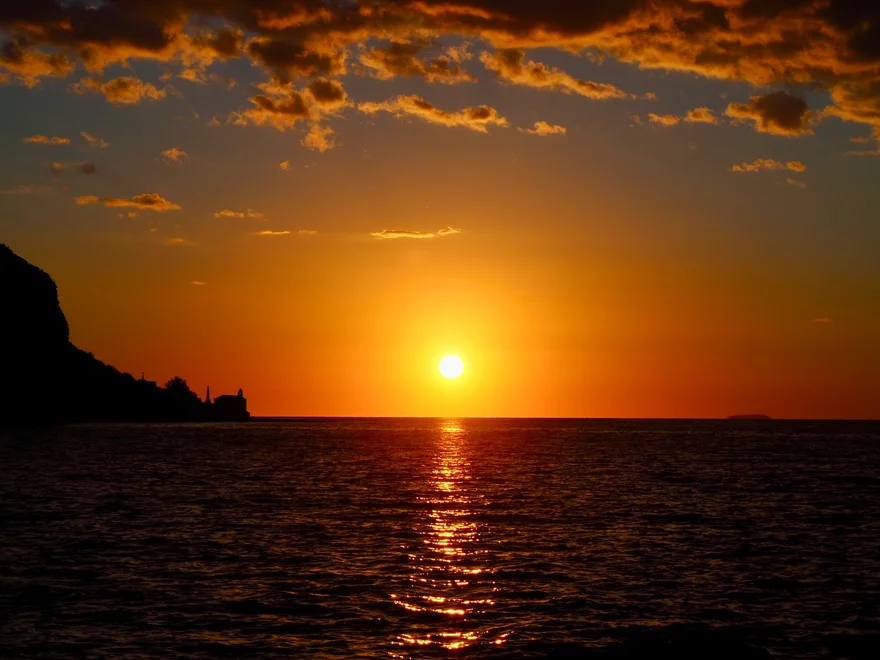
We almost skip sunset in Limeni. Then we drive down to the little harbour town after all.
We have seen many sunsets on our travels. This is among the most beautiful. It is hard to explain why without returning to light and water. Perhaps the photograph should tell it.
On the way to Kalamata
Agios Nikolaos — another harbour
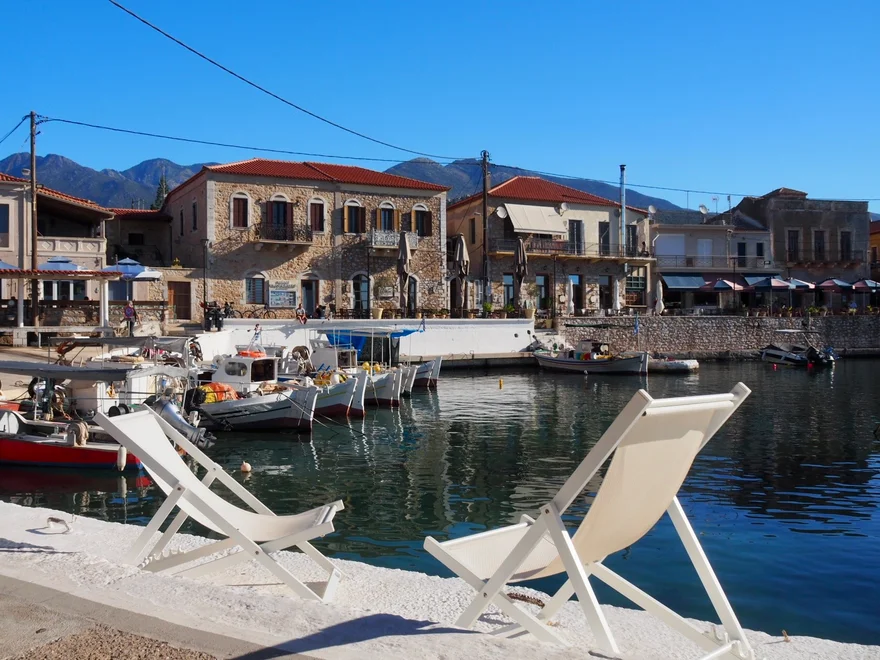
We stop in Agios Nikolaos on the way north. Another little harbour, fishing boats and waterfront cafés. And again, a mood of its own. We like the quiet. After the stone towers of the southern Mani, this remains above all a pleasant pause beside the sea.
Messene — imagining a whole city
Of all the excavations on this trip, Messene gives us the most complete impression of an ancient city. A theatre, rows of columns, large complexes and plenty of space between. As we move from one area to another, we get a stronger sense than elsewhere of how the city might have worked as a whole.
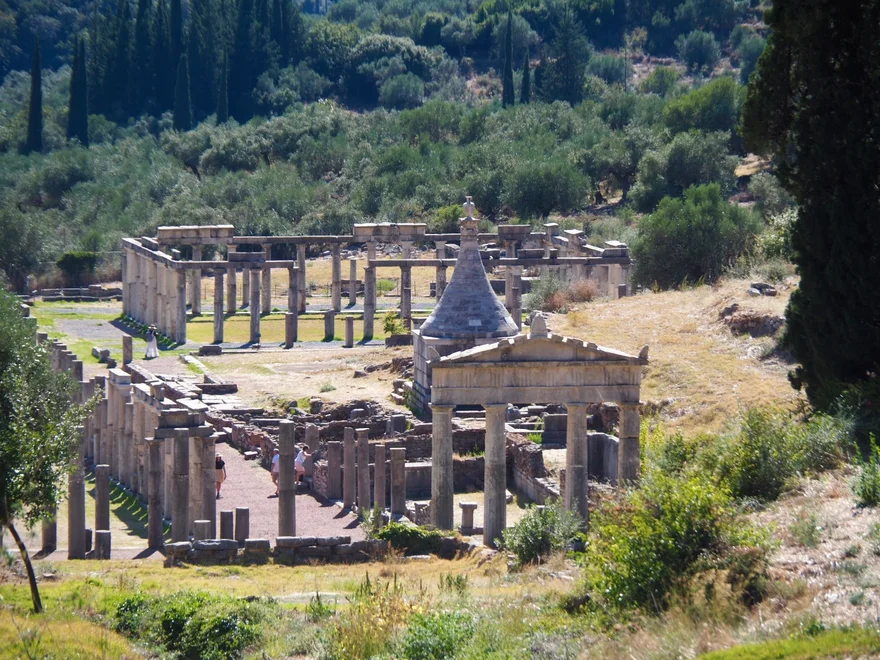
Delphi had the particular aura of a sanctuary; Mycenae unsettled us with the age of its buildings and objects. At Messene, it is the connections that interest us. The paths between buildings are part of the experience.
During our visit, it is noticeably quieter than the better-known sites. We have room and time to look around. Afterwards, we are surprised that Messene has not yet made it onto the UNESCO list.
Kalamata — the same promenade
We reach Kalamata in the evening and stay one night. For us, it is far more than another coastal city.
Forty years ago, we arrived shortly after the devastating earthquake. Red Cross tents stood along the seafront. Now we walk there again. The city is lively, boats lie in the harbour, life by the sea goes on.
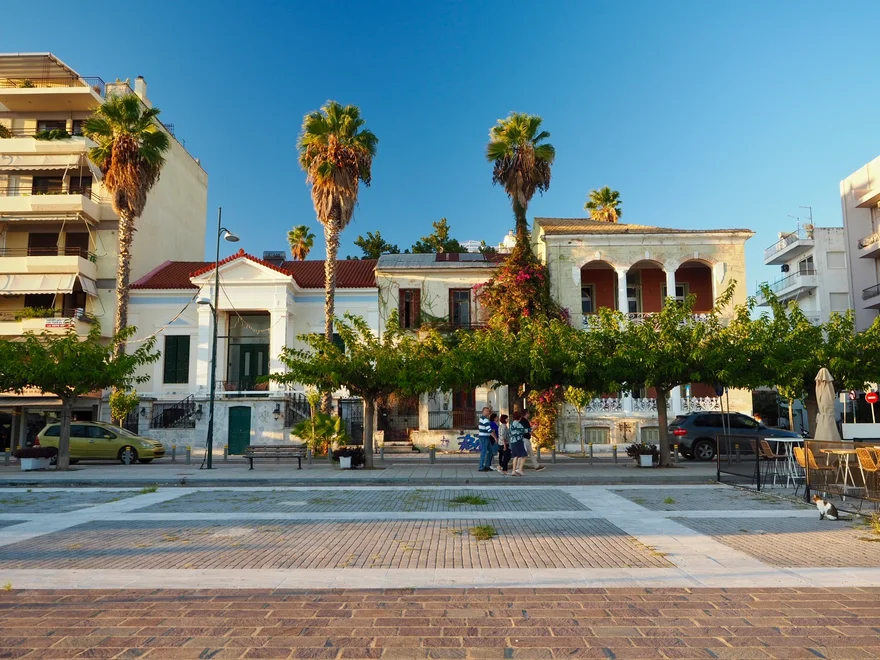
Where we think our old campsite was, we find one today. These specific places make the memory so vivid. The same promenade. The familiar surroundings.
At the Corinth Canal
On our way back to Athens, we stop at the Corinth Canal. From the bridge, we look into the narrow cut between high rock walls. The water lies far below. A ship in the channel makes the scale truly apparent.
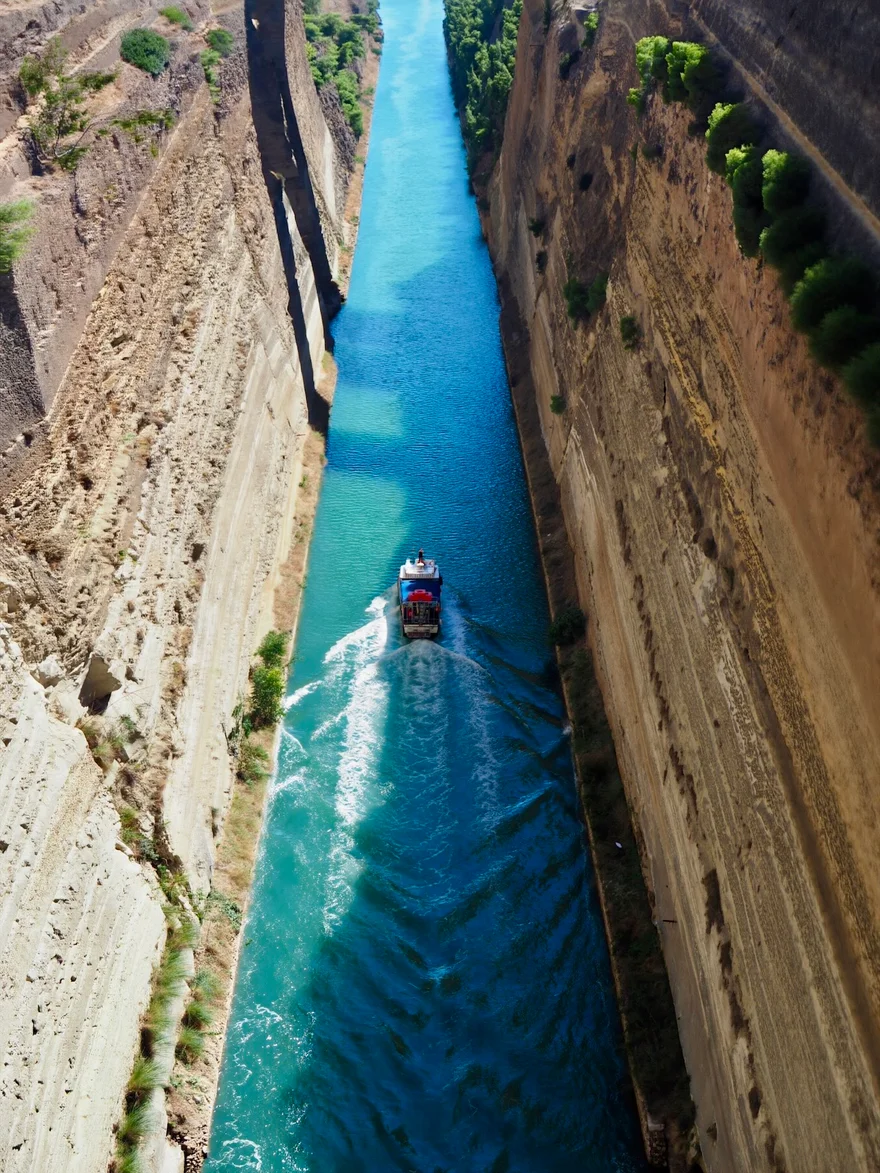
You could also bungee-jump here. We settle for looking down.
Then on to Athens, where we stay for four days.