04 · Greece — Four journeys. One trip.
Athens — with time to spare
We had expected the Acropolis to impress us. We had not expected to like the city around it quite so much. After last year’s brief visit, this time we stay for four days.
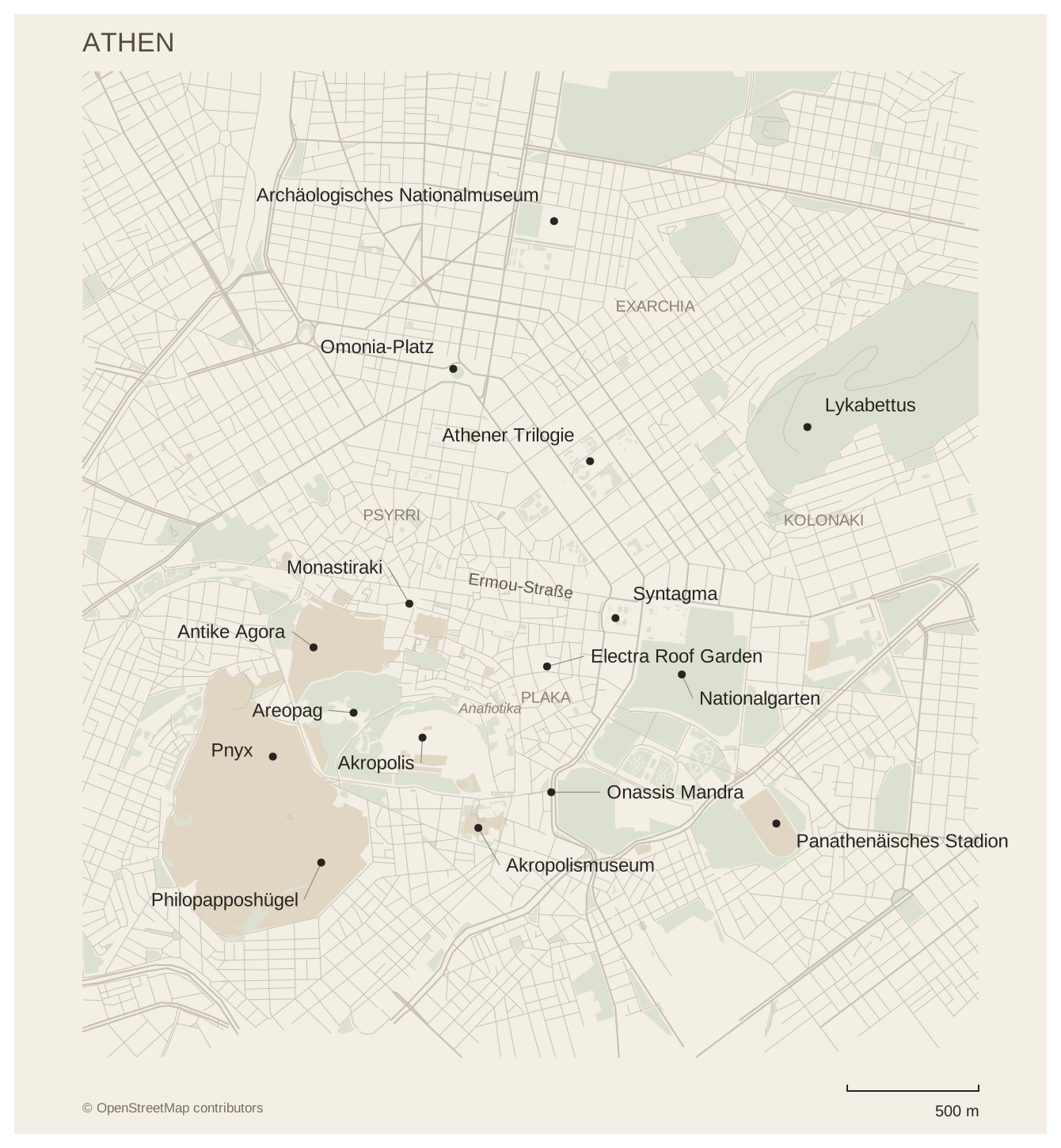
First evening — a place with a view
Lycabettus and Kolonaki
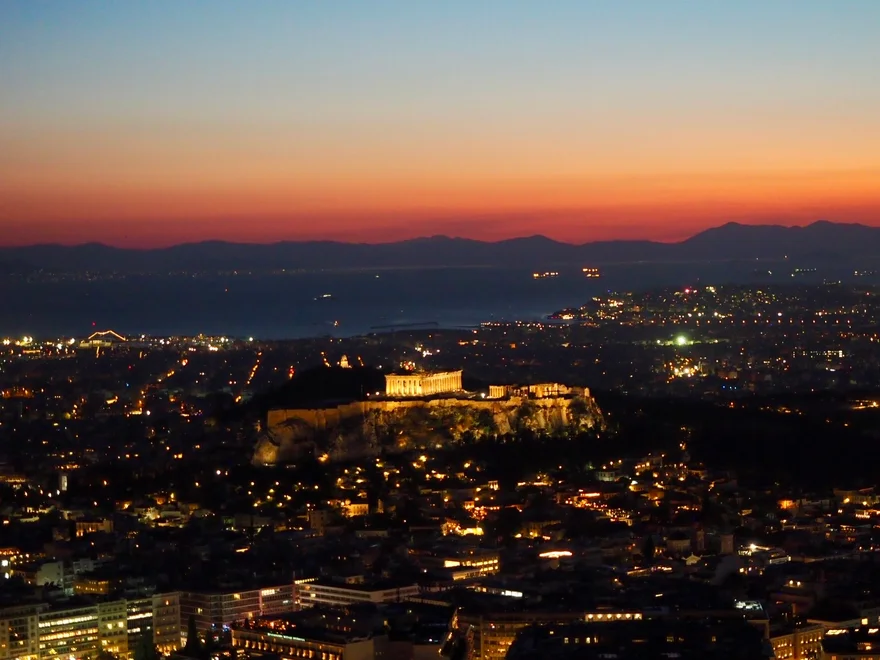
We reach the top of Lycabettus by funicular forty-five minutes before sunset. We are far from the first. The little square in front of the church is crowded — with a certain amount of jostling — and the good places along the west-facing wall are taken. We are lucky enough to find a slightly raised spot beside the church wall.
Athens spreads beneath us. Only up here do we begin to grasp how far it extends. The Acropolis looks almost small within it. Anyone expecting the sun to set behind it will be disappointed: during our visit, it goes down well to the right, towards Piraeus. Nor does it sink into an empty sea. The hills of Salamina are there, along with haze over the water.
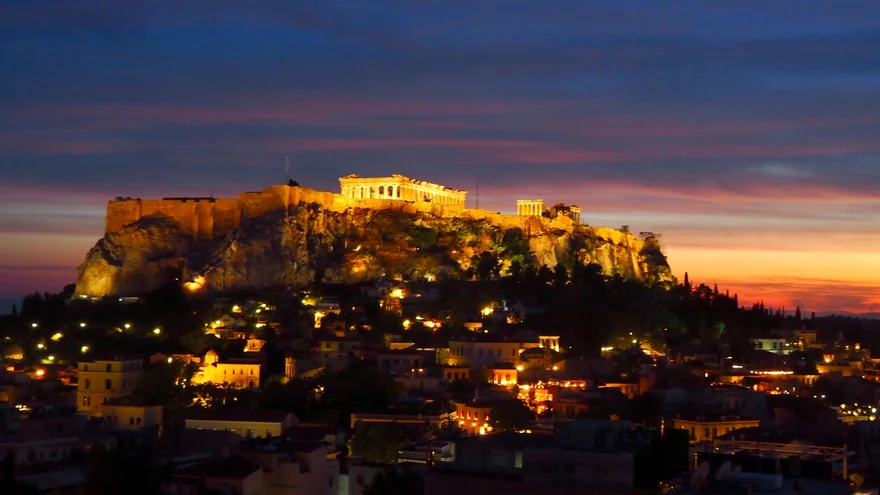
Enough qualifications, though. The view is magnificent. Perhaps the light after sunset is even better than the sunset itself. Once the Acropolis is illuminated and the sky behind it still glows, we have the picture that made the crowd worthwhile.
At the foot of the hill lies Kolonaki. Smart shops lower down; further up, the streets narrow, steps multiply and homes replace shops. After the city on a grand scale, the city at eye level again.
Day one — the Acropolis from every side
Early on the rock
There is almost nothing left to say about the Acropolis. You know the images: the Parthenon, the columns, the rock above the city. Then you stand in front of it and look anyway.
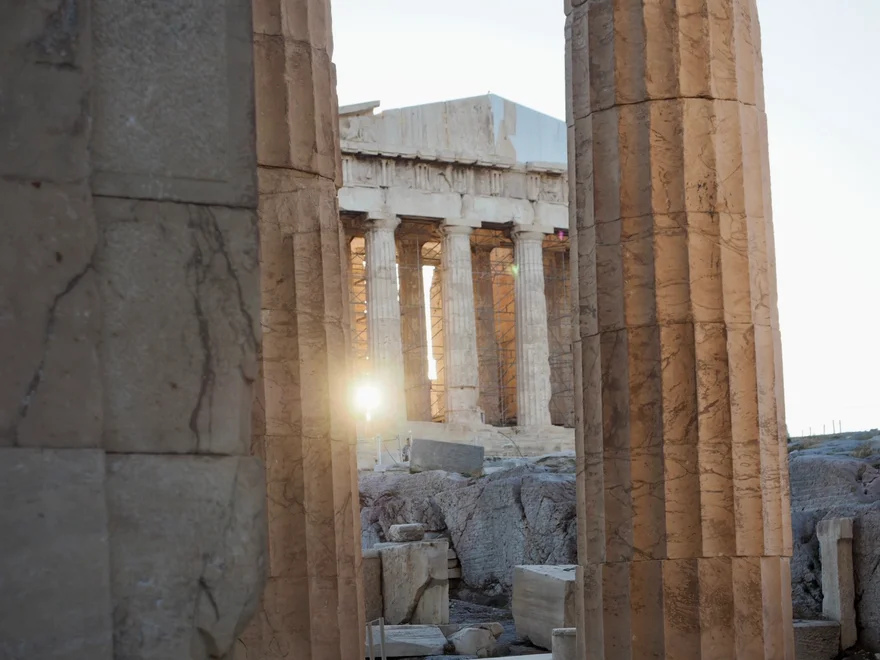
For the first half-hour after admission begins at 8 am, the plateau is still comparatively uncrowded. The early light is soft and warm. Between the Propylaea, Parthenon and Erechtheion, we have time to look closely. At the buildings’ proportions, the differences between temples, the evidence of work on them. Restoration is part of the place we visit today too.
You can put the Acropolis on a list as a single sight. Once here, that familiar picture opens into many separate views. A glimpse between columns, the Caryatids of the Erechtheion, then the city far below. We are glad we allowed time for it.
The visit continues in the museum
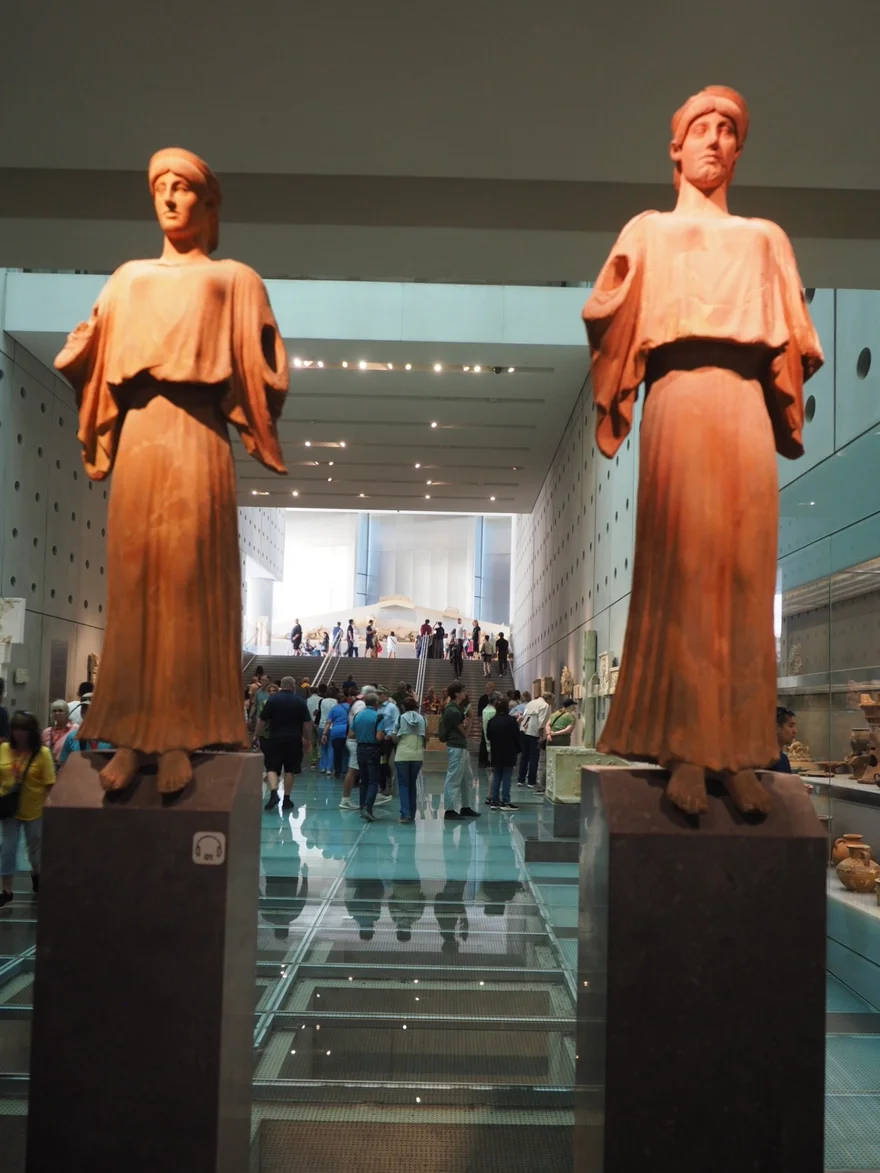
The Acropolis Museum belongs with the site. What you see at a distance on the buildings above comes close here. Even the route through the museum echoes the ascent: a gently rising ramp, finds from the slopes, then Archaic figures standing freely in the galleries.
Some retain traces of colour. The Caryatids deserve a look from behind too, at their elaborate braided hairstyles, almost impossible to appreciate in their original setting. Details like these turn a familiar monument back into the work of individual people.
At the top is the glass-walled Parthenon Gallery, aligned parallel to the temple opposite. Surviving sculptures appear in their original context; casts supply pieces held elsewhere, notably in London. It helps us understand the whole. It also shows how widely that whole is now scattered.
The museum explains the Acropolis without reducing it to an illustration in a history lesson. Through the windows, the rock remains in sight. We would allow time for both together.
The Agora, Monastiraki and Ermou
The Ancient Agora brings us to life below the temples. Commerce, politics, encounters and religion shared this space. Today, among the surviving buildings and many foundations, it takes some imagination to see a bustling part of the city.
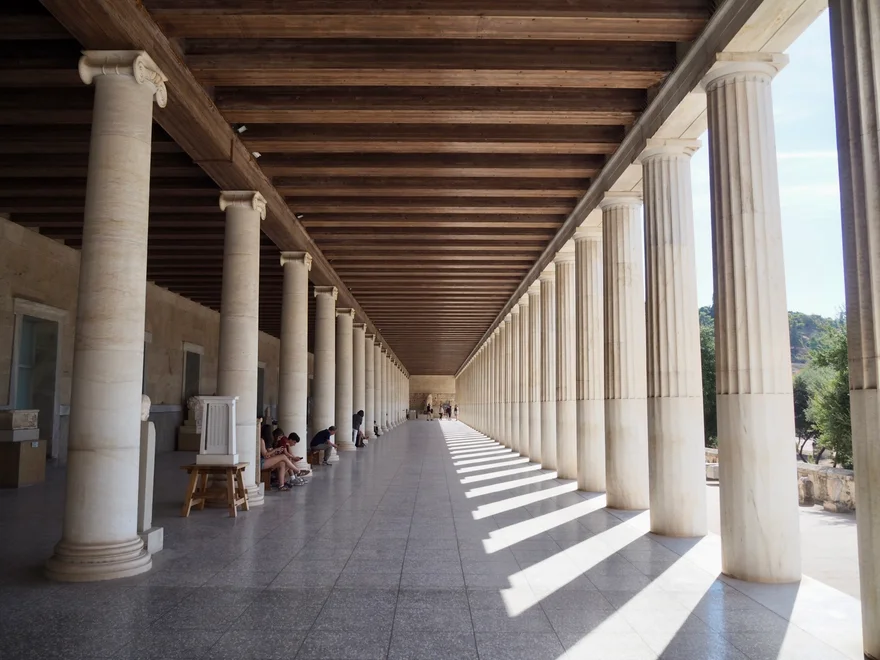
Monastiraki Square needs no such imaginative effort. The bustle is very much present: people, street performers, cafés, markets in the adjoining lanes. And the Acropolis above it all again. Could there be a lovelier square?
Ermou then takes us past the international chains and shop windows of the shopping street. In the middle stands the little Kapnikarea church. In Athens, you rarely need to search for different eras side by side. Often, they are simply in your way.
A rock, a rooftop and the Acropolis again
From the Areopagus, the bare rock below the Acropolis, we look once more across the Agora and the city. Another perspective, different from Lycabettus the previous evening. We begin to understand why you can never take enough photographs of this hill and its temples.
In the evening, the view becomes part of dinner. Electra Roof Garden is at the top of the Electra Palace in Plaka. The illuminated Acropolis seems almost within reach. After a day on the rock, in the museum and among the excavations, sitting at a table with it before us feels faintly surreal.
Day two — out to the sea and back
Vouliagmeni and Cape Sounion
We have kept the hire car for Sounion. On the way is Lake Vouliagmeni, just behind the coast below a steep rock face. On social media, it can look almost unreal. In person, we see a fairly small lake, loungers, parasols and an organised bathing facility. The setting is attractive, but we do not quite share the excitement.
At Cape Sounion, the columns of the Temple of Poseidon stand above the sea. The location does much of the work: rock, temple and the open Aegean beyond. A wonderfully photogenic place.
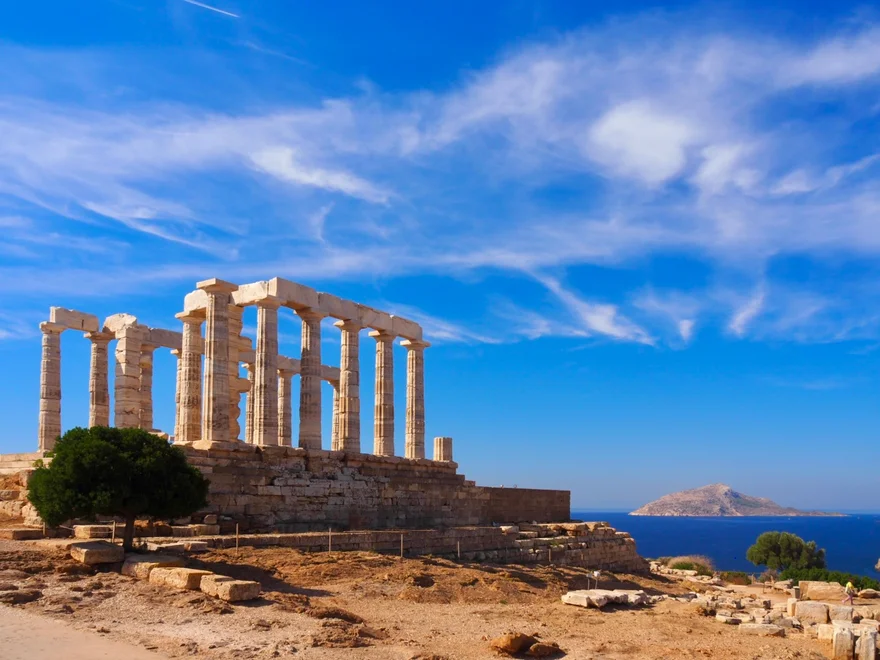
Even so, looking back, we are unsure whether we would plan the excursion the same way again. It took a substantial part of a day. Without Sounion, we could also have returned the car earlier, avoiding traffic in and around Athens and manoeuvring in our Airbnb’s tight underground garage. We have no shortage of lovely photographs from the cape. We simply wonder whether another day in the city might have given us more.
A stadium made of marble
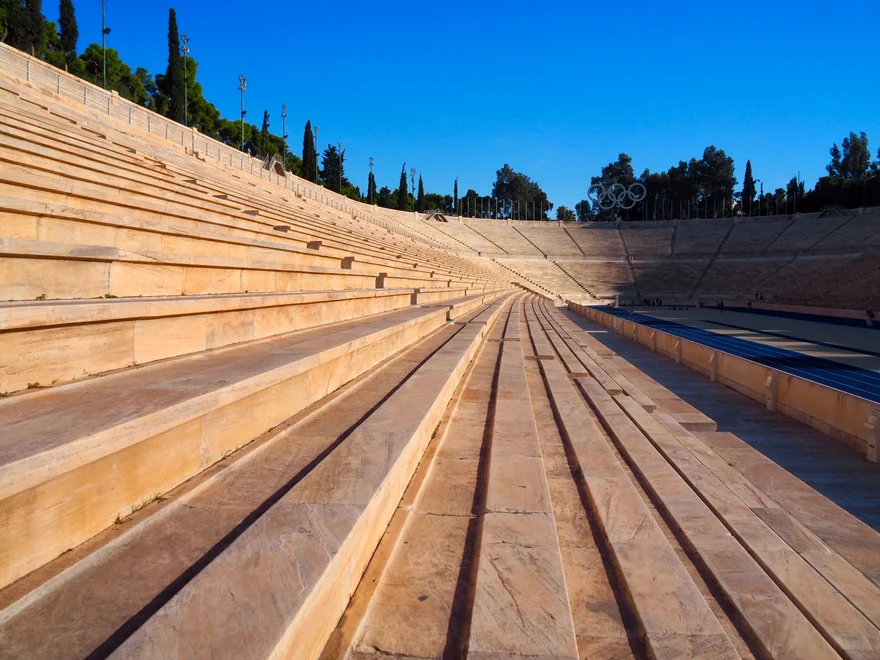
Day two also includes the Panathenaic Stadium. After so many ruins, here is an arena we can grasp as a whole: long rows of pale marble seats and a running track whose shape is instantly familiar. The present stadium was restored for the first modern Olympic Games in 1896. Another way of reconnecting with antiquity.
Day three — through the neighbourhoods
From the National Garden to Exarchia
Today we explore on foot. The National Garden, Syntagma, the Athenian Trilogy, Exarchia and later Psyrri: the sequence alone shows how little Athens can be reduced to a single cityscape.
In the National Garden behind Parliament, the day begins among trees and shaded paths. Next door is Syntagma Square, Parliament and the Evzones at the Tomb of the Unknown Soldier. Further along Panepistimiou come the Academy, University and historic National Library building, the so-called Athenian Trilogy. Columns, pediments and sculptures — this time from modern Athens.
Exarchia changes the impression sharply. Graffiti, political messages and street art belong to the streetscape here. On some walls, pictures and lettering overlap so densely that they are almost inseparable.
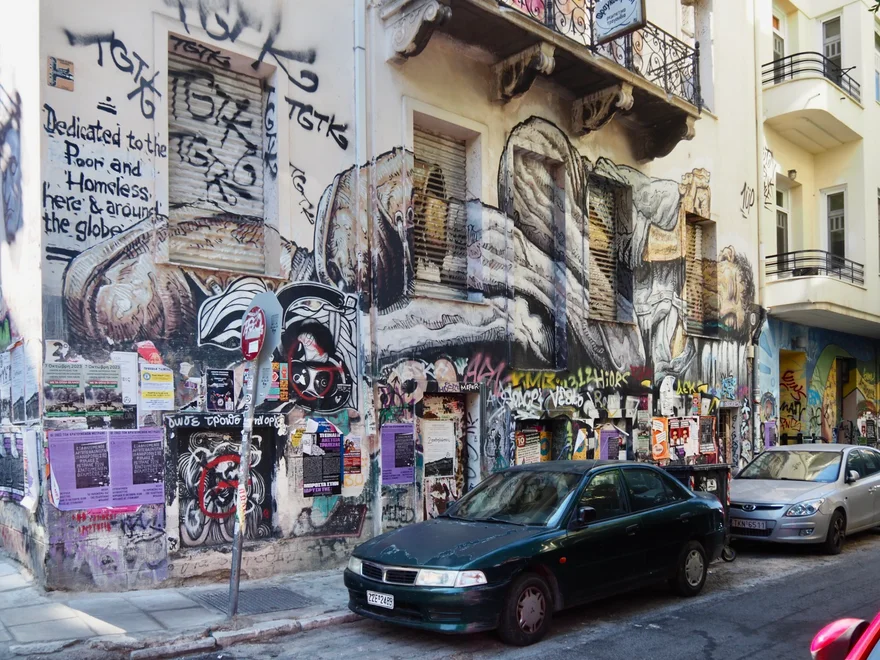
Street art has held our attention in other cities too. Here again, the images keep stopping us in our tracks. For this walk, they are first of all a good reason to stop more often and look closely.
Our photographs from Athens, London, Miami and Toronto now come together in a Street Art special.
Meeting our journey again in the National Museum
The National Archaeological Museum is more than another major stop. Here we encounter places we have visited over the past few weeks. Mycenae above all. And, in the wall paintings from Akrotiri, somewhere we missed on Santorini.
We already know the so-called gold Mask of Agamemnon as a reproduction in Mycenae. Now we stand before the original. Angie notices that the two do not look quite alike.
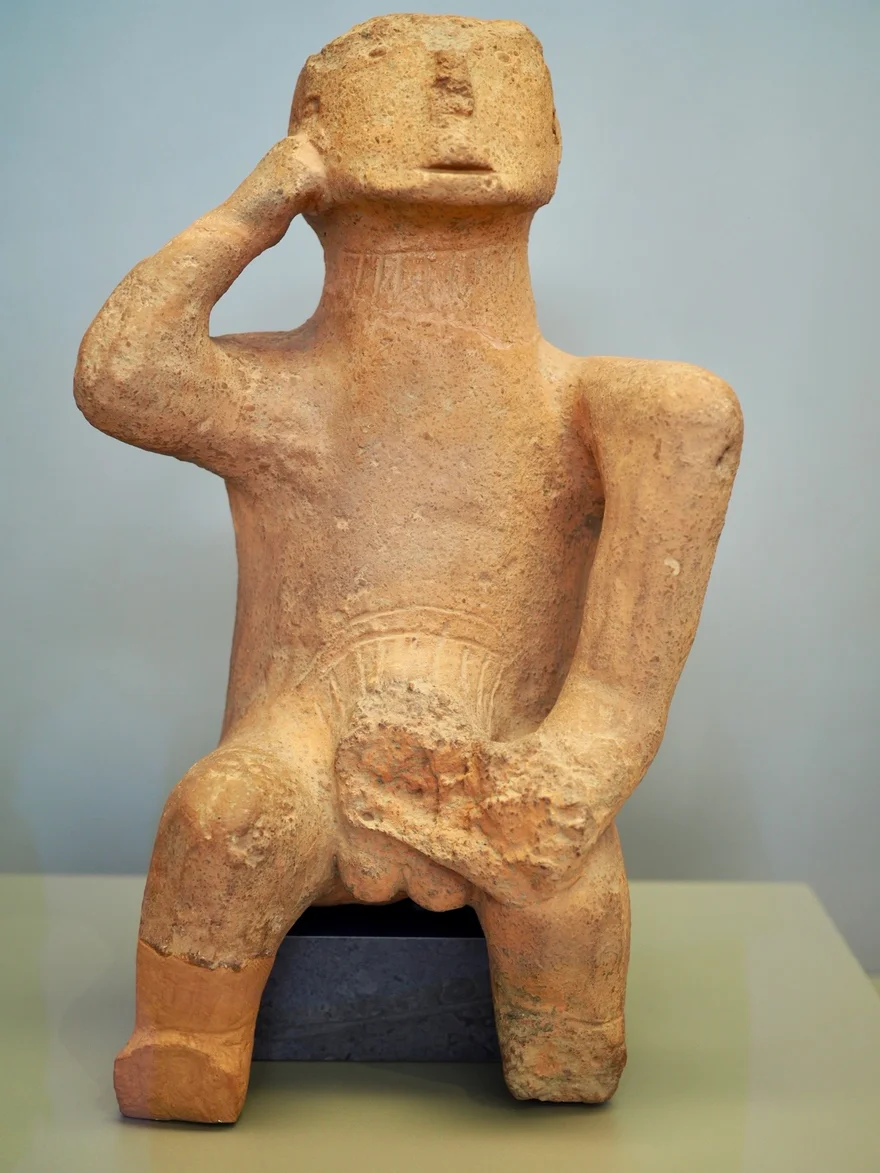
Angie is particularly taken with a much older man: a seated clay figure from the Karditsa area, made between 4500 and 3300 BC. The so-called “Thinker” has one hand to his head, the other to his genitals. To Angie, the principal male preoccupations have clearly remained much the same for millennia. I find the thought rather appealing too. Whether the figure was originally intended that way, of course, we do not know.
Then there is the Antikythera mechanism: the remains of a device more than two thousand years old, capable of calculating astronomical cycles with gears. After the jewellery and walls of Mycenae, another reason to reconsider what we think people could do back then.
We could add a long list of famous exhibits. What stays with us most is how much of our journey comes together again in this museum. The places regain their objects — at least in our minds.
Psyrri and our favourite viewpoint
In Psyrri, we continue among cafés, tavernas, workshops and painted façades. The abundance of places to eat surprised us on last year’s short visit. With more time, we can now get to know the neighbourhoods around them.
Late in the afternoon, our walk takes us to the Pnyx and Philopappos Hill. In antiquity, the Athenian Assembly met on the Pnyx. Today, you can walk among the hills and look across to the Acropolis.
Philopappos becomes our favourite. The marble temples stand directly opposite, warm in the late light. From Lycabettus, the whole city lay beneath us; here we are much closer to the Acropolis. And we can move around, find different angles, walk on and stop again.
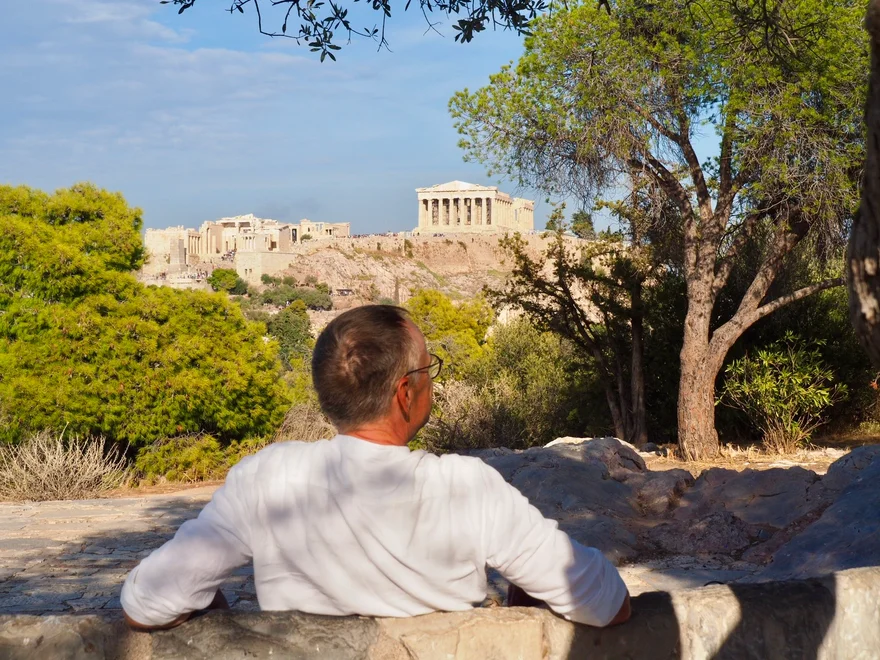
A hidden gem? Probably the wrong phrase for somewhere like this. But if we could recommend only one of our viewpoints, this would be it.
Bowls on the water
At Onassis Mandra, something quite different awaits us. White porcelain bowls float in three circular pools. A current moves them; they approach, touch and drift apart again. Bright, delicate sounds emerge.
The installation is called “clinamen”, by Céleste Boursier-Mougenot. After temples, street scenes and museum objects, water and crockery making music. There is room for that too in these days in Athens.
White porcelain bowls drift across the water and touch, producing the installation’s bright sounds. Play the video with sound to hear them.
Open video separatelyDeparture day — around the Acropolis once more
On our final morning, we walk around the Acropolis again. This time, we make it to Anafiotika. The whitewashed houses, narrow lanes and blue doors really do suggest a Cycladic village. After our weeks on the islands, that feels especially familiar. Only the rock of the Acropolis rises immediately above.
On the way to the airport, we make one last detour to Brauron and the Sanctuary of Artemis. Our final excavation of the trip. After Athens’s great sites, a quieter place, with columns, low walls and greenery between.
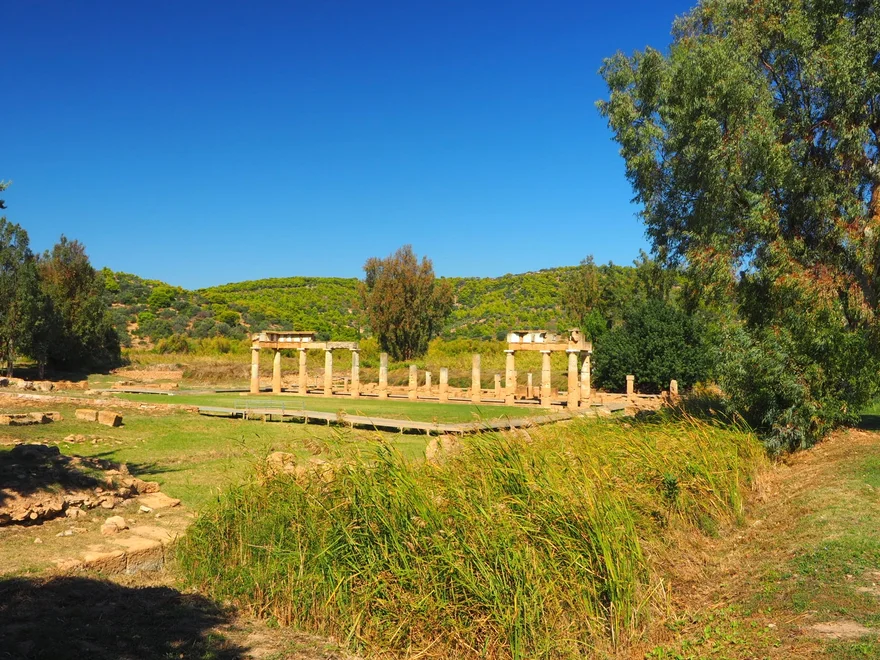
Four days were worth it. We could engage with antiquity without reducing the rest of the city to the route between sights. We explored neighbourhoods, visited museums, ate well and found our favourite view of the Acropolis.
Are we finished with Athens? No. This time, we simply know a little more clearly why we want to return.