Special

Following street art

A special from London, Miami, Toronto and Athens

A guided walk in London changes the way we look. On later journeys, we find ourselves stopping at painted walls, looking at utility boxes and above doorways. Sometimes we seek out a particular work and get to know a whole neighbourhood along the way. Four cities, several journeys — and something we keep encountering in very different places.

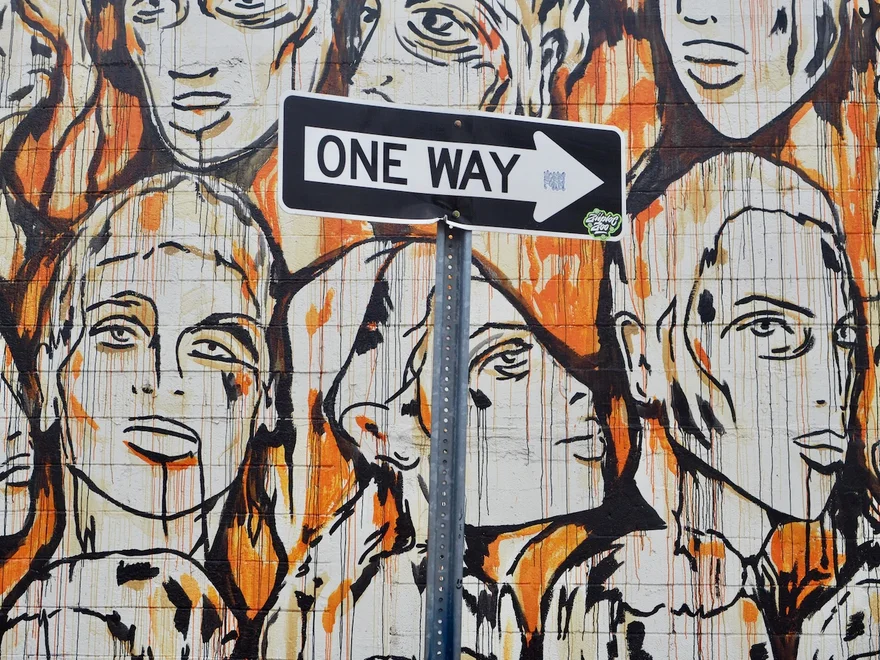
A One Way sign in front of a wall covered with black-and-white faces and splashes of orange.
Wynwood, Miami: street art meets everyday street life.

Four cities, one shared interest

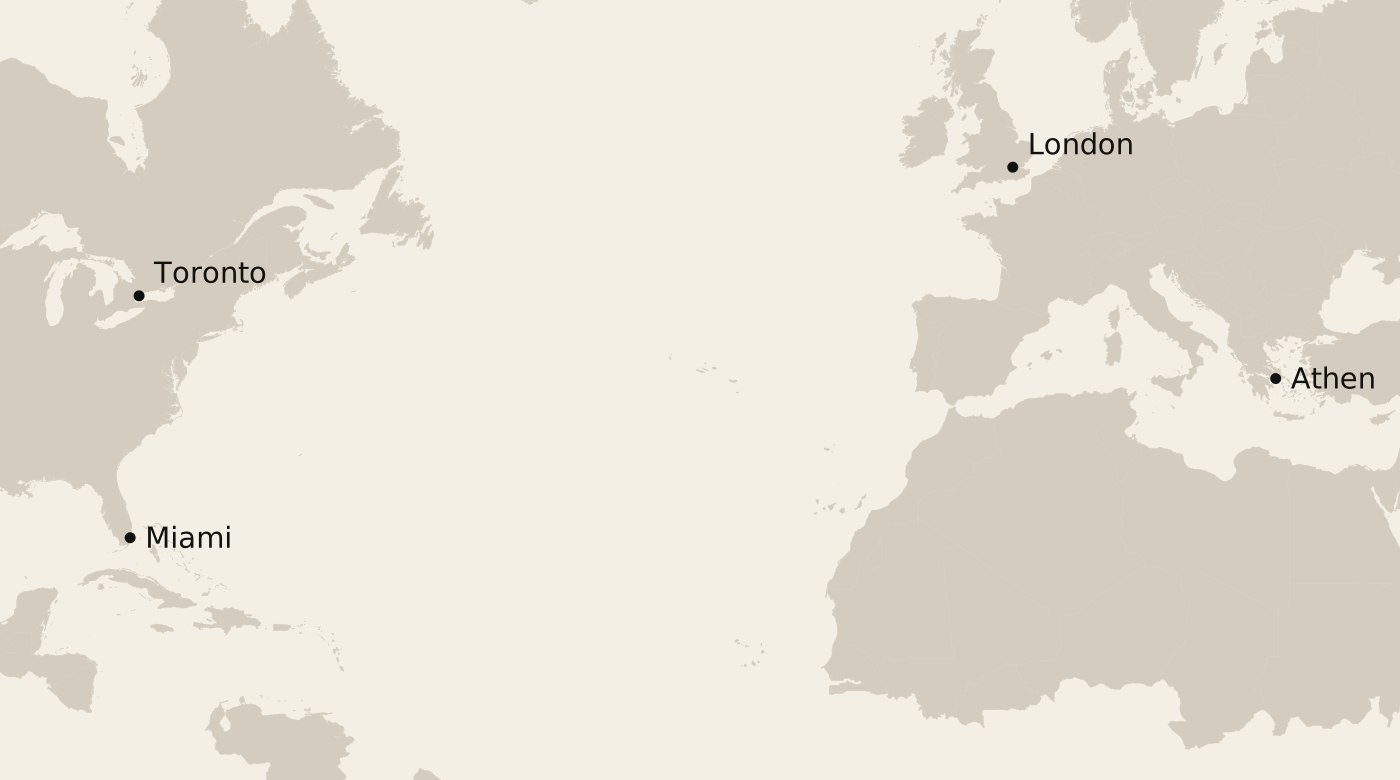
Map of the North Atlantic showing London, Miami, Toronto and Athens, with the Great Lakes shown as unlabelled bodies of water.
Four places where we encountered street art on our travels.Map data: Natural Earth
Enlarge map
Scroll to explore the map

London

January 2023 · East End and Brick Lane

Our interest in street art begins in London’s East End. We’ve booked a tour with “Alternative London” and walk through the streets around Brick Lane. We would probably have spotted the large murals on our own. But the tiny stickers, the miniature sculptures and a picture made from stretched threads? Much of it would have passed us by. We learn about the artists, their techniques and how their relationship with the police shapes their work. Not everything is made with permission; some pieces have to go up quickly. Alongside them are large commissions, including work for well-known brands. What we once saw mainly as colour on walls acquires names, stories and all sorts of forms. The value of that tour lasts well beyond the afternoon. From then on, we look more closely wherever we go — even where there’s no sign pointing to an attraction.
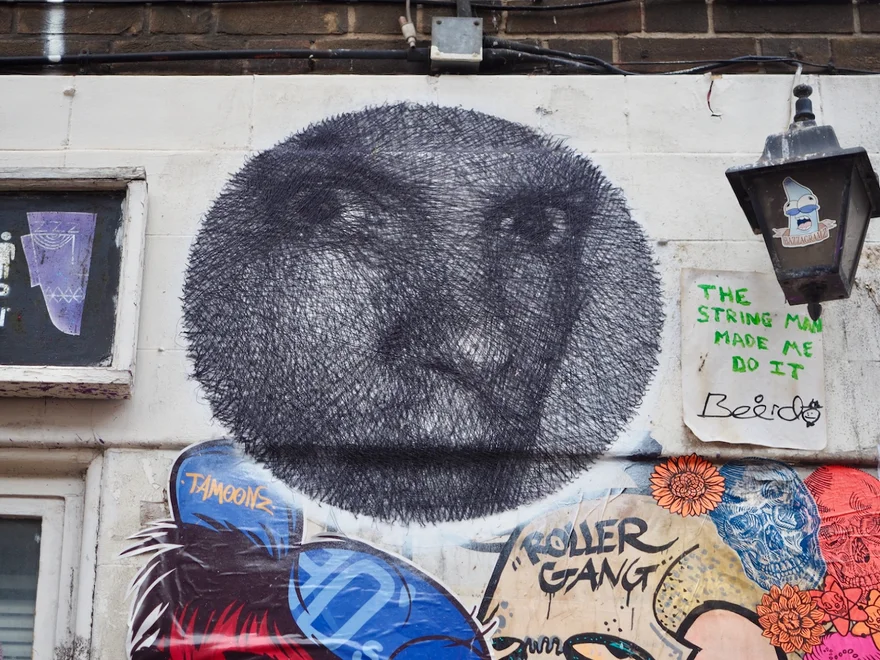
A circular image made from densely stretched dark threads on a white wall, surrounded by stickers and paste-ups.
Around Brick Lane: a thread portrait among stickers and other small works.

We took our first street art tour with “Alternative London”.
Miami

January 2024 and January 2026 · Wynwood

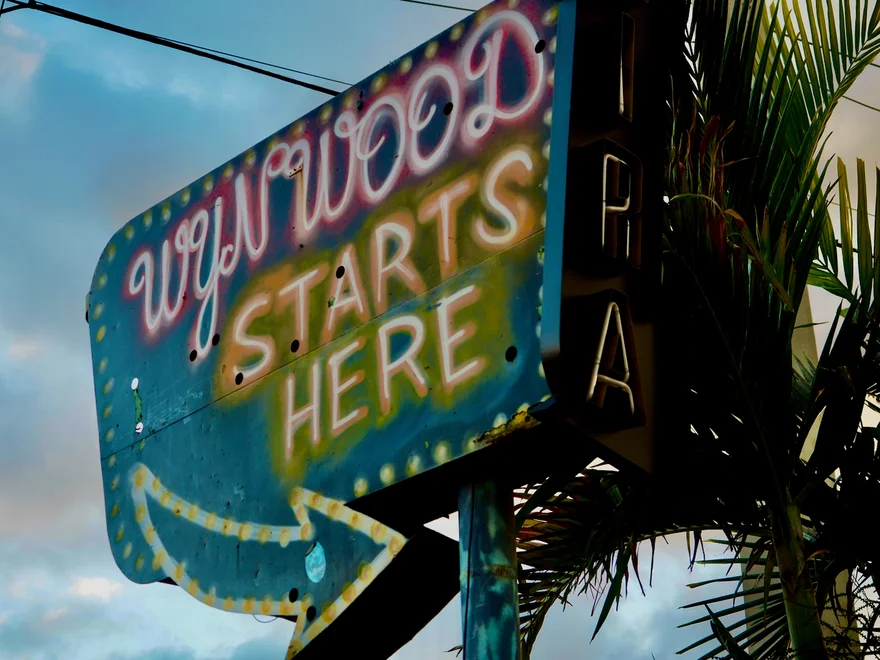
“Wynwood starts here”, says a sign. It really does feel as though an entire neighbourhood has defined itself through its street art. Large murals cover the façades; around Wynwood Marketplace, shipping containers are painted too. The art continues across signs, bins and fire hydrants, right down to the pavement. In between are fashionable cafés and contemporary galleries. Art has long been a reason to come here, have a coffee and spend some money. At the heart of the neighbourhood are Wynwood Walls, an open-air street art museum founded in 2009 by property developer Tony Goldman and curator Jeffrey Deitch. Here, works are selected and presented; alongside the murals we see paintings indoors and large sculptures. It’s a short step from the street to the art world. The neighbourhood’s redevelopment and gentrification are part of that story. For now, we enjoy the variety on our walks — and notice how closely art, urban development and marketing are intertwined.

A painted sign reading “Wynwood starts here”, with an arrow beside palm leaves.
“Wynwood starts here” — street art is part of the neighbourhood’s identity.

Wynwood Walls is at 2516 NW 2nd Avenue. The museum is a separate, curated space within the neighbourhood.

Toronto

June 2025 · Graffiti Alley

In Toronto we turn off south of Queen Street West into Graffiti Alley. For several blocks, narrow lanes lead past the backs of buildings, garage doors and brick walls. Almost every surface is painted. Large figures, lettering and smaller marks sit side by side or overlap. These are the unassuming service lanes behind the buildings of the Fashion District. Art has made them a destination in their own right. In 2011, the city formally recognised their importance and exempted them from its municipal graffiti rules. That isn’t blanket permission to spray any wall that belongs to someone else. For us, it’s above all a rewarding detour: a back lane we take our time in. It has long had a place in the guidebooks.

A narrow lane between densely painted brick walls, with green foliage and a few people in the background.
Toronto’s Graffiti Alley — art on the city’s back walls.

Graffiti Alley runs around Rush Lane in the Fashion District, south of Queen Street West between Spadina Avenue and Portland Street. Toronto was the final stop on our road trip along America’s East Coast.

Athens

October 2026 · Across the city’s neighbourhoods

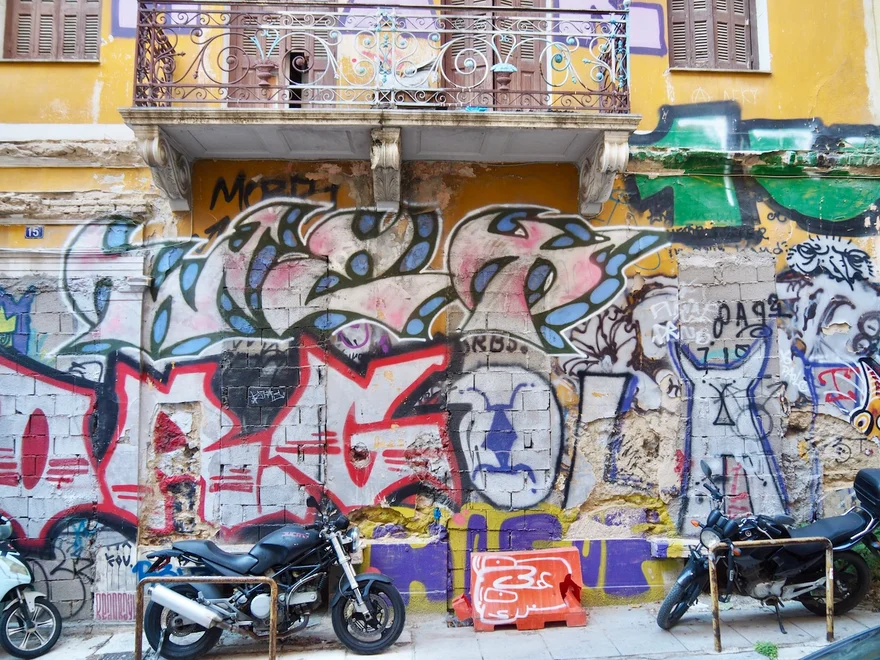
In Athens, street art seems to be everywhere. Every wall, garage door and utility box appears to serve as a canvas. Images, lettering and tags overlap; some look almost incidental, others occupy an entire façade. We seek out a few well-known works. On Pireos Street we find “Hands”, Pavlos Tsakonas’s design after Dürer’s praying hands. Here the fingertips point downwards. In Exarchia, an enormous man lies across a building: “No Land for the Poor” by WD, Wild Drawing. Even the windows become part of his body. Between these destinations we discover many smaller works. Some distinctive styles seem to follow us around the city: near our Airbnb, around the Acropolis and again in Exarchia. We turn into a street for a picture, then find ourselves looking at its houses, shops and cafés too. Street art has become another way of finding our way around a city.

A yellow façade with a balcony, layers of graffiti and lettering, and motorcycles parked outside.
Athens — images and lettering share a wall while everyday life carries on in front of it.

Athens was the final stop on our journey through Greece.