Journey

Cornwall: Coasts, places and pictures in our heads

Exploring Cornwall from St Ives — eight places visited and one possibility left out

We arrive in Cornwall from London with pictures in our heads: Rosamunde Pilcher, old harbour towns, a spectacular coast. We settle into our Airbnb in St Ives. Along the way, we find some of what we expected — and other things that stay with us longer. Here we bring together the places on our journey, from Lizard Point to Tintagel.

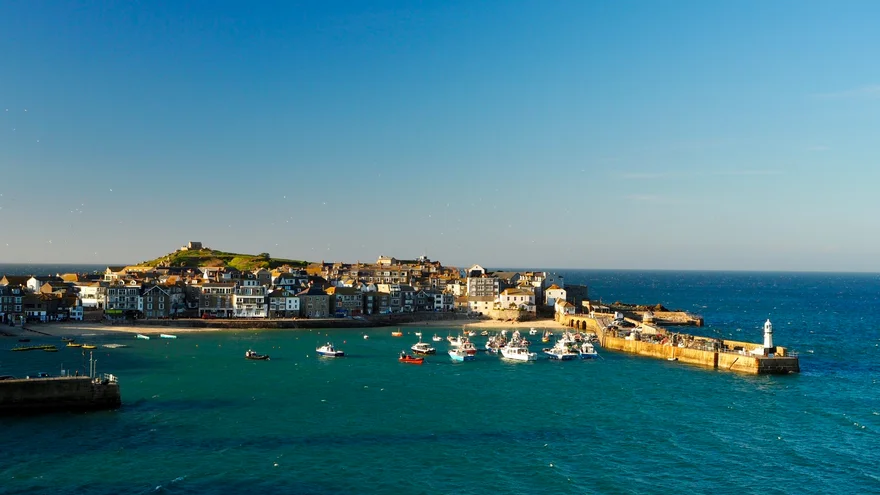
Looking across St Ives harbour, with boats, a harbour wall and houses beside the water.
St Ives — our base in Cornwall.

The places on our map

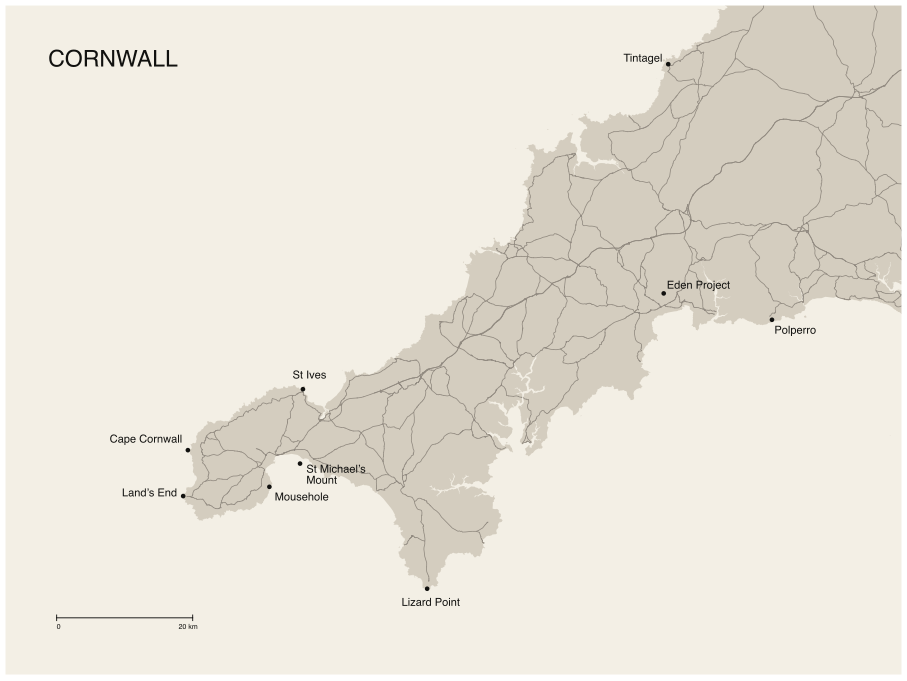
Map of Cornwall showing main roads and nine marked places between Land’s End, Lizard Point, Tintagel and Polperro.
Our destinations in Cornwall. We planned to visit Polperro but chose the Eden Project instead. The roads are shown for orientation; they do not trace our route.Map source: © OpenStreetMap contributors
Enlarge map
Scroll to explore the map

St Ives

Our base

St Ives was our temporary home. This was where we had our Airbnb, and where we set out to explore Cornwall. We came from London with a picture shaped at least as much by television as by the guidebook: Rosamunde Pilcher, picturesque coastal towns, a carefully presented past. The view across the harbour fitted that picture nicely. Houses beside the water, boats in the bay, the harbour wall facing the open sea. And two wide beaches, a headland battered by the sea on two sides. People wrapped up against the wind on the sand, watching the sunset. Walking through the lanes and along the waterfront, we noticed something else: shops, pubs and fish-and-chip restaurants that apparently needed little visible renewal. And an amusement arcade in a prime spot on the harbour, “Since 1934”. The difference between the beautiful view from a distance and our impression up close became the first article from this trip.
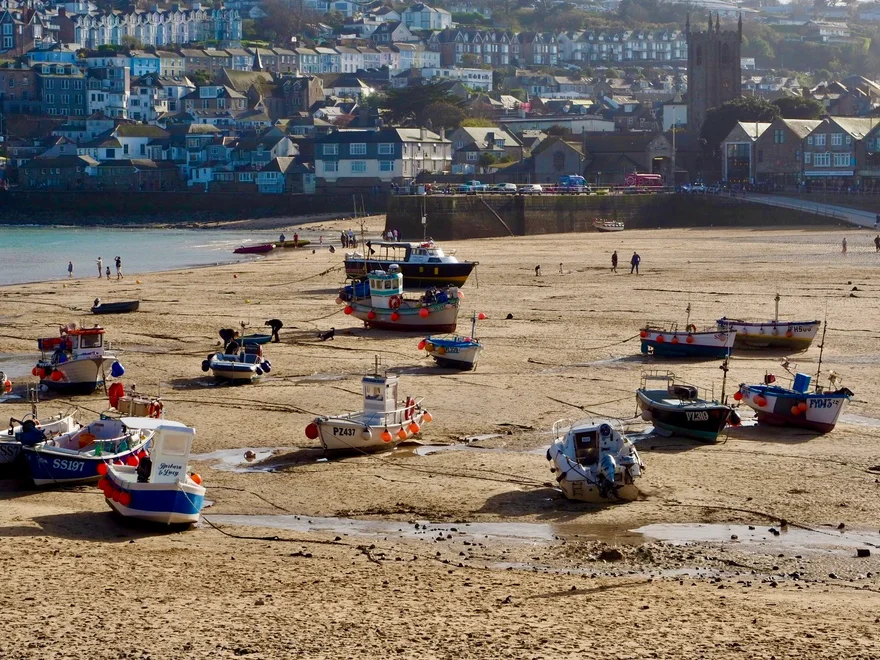
Fishing boats rest on the sand in St Ives harbour, with houses rising up the hillside behind them.
St Ives — at low tide, the boats in the harbour are left high and dry.

Lizard Point

On the southern edge

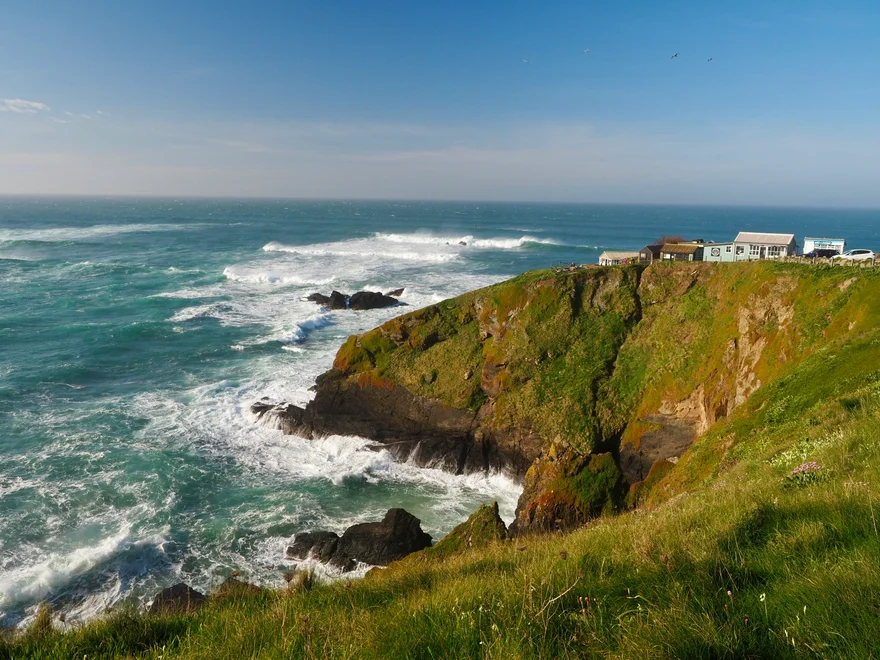
Lizard Point is the southernmost point of mainland Britain. That explains its geographical significance, but not yet its appeal. Here the water breaks in white bands against the rocks. Above lie green slopes, a few houses close to the edge. A lighthouse. There is scarcely room for a gentle transition. This immediate proximity of grass and sea is one of the images we take home from Cornwall. It also helps explain why the coast had occupied so much space in our idea of the trip. There is no need for a famous name or a story from television here. The landscape is reason enough to come.

Green cliffs and white surf at Lizard Point, with several buildings on the headland.
Lizard Point — green slopes above the surf at the southernmost point of mainland Britain.

St Michael’s Mount

A path the sea reveals

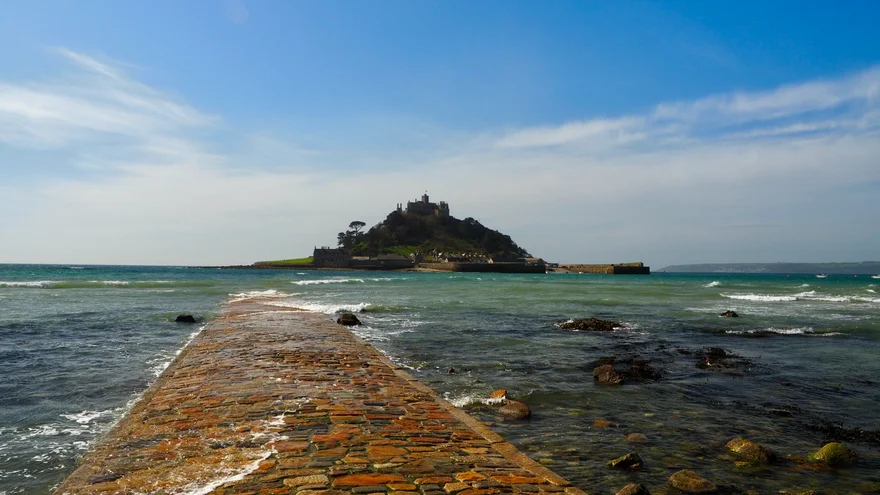
Off Marazion lies St Michael’s Mount, a small tidal island with a castle at its highest point. Even from the mainland, it makes an almost perfect picture: water, island, trees and the silhouette of the buildings above. What is particularly striking, though, is the causeway, the paved path leading across. At high tide it disappears beneath the water. When the tide is low, it becomes a footpath. Anyone wanting to cross has to plan around the tides. The former monastery on St Michael’s Mount was, incidentally, a dependency of the abbey of Mont-Saint-Michel in Normandy.

A paved causeway between shallow stretches of water, with St Michael’s Mount and its hilltop castle in the background.
St Michael’s Mount — at low tide, the paved causeway leads from the mainland to the island.

Mousehole

Cornwall up close

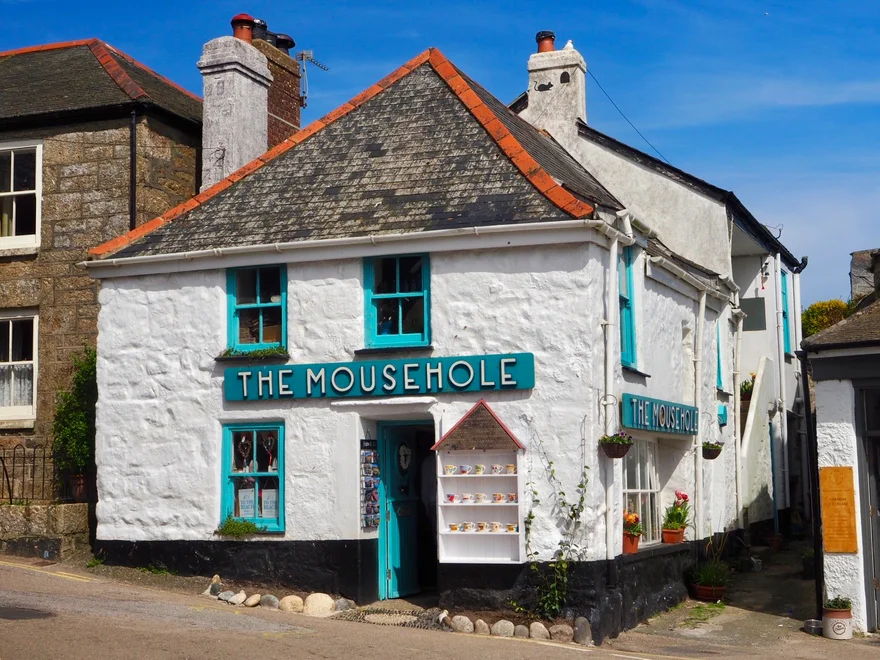
Mousehole lies on the coast south of Penzance. The little harbour village is one of those views you keep encountering while planning a trip to Cornwall. Here, too, the boats in the harbour are left completely high and dry at low tide.

A white house with a slate roof, turquoise window frames and a sign reading “The Mousehole”, beside a stone building.
Mousehole — instead of the harbour view, a house whose façade catches our eye.

Land’s End

A big name by the sea

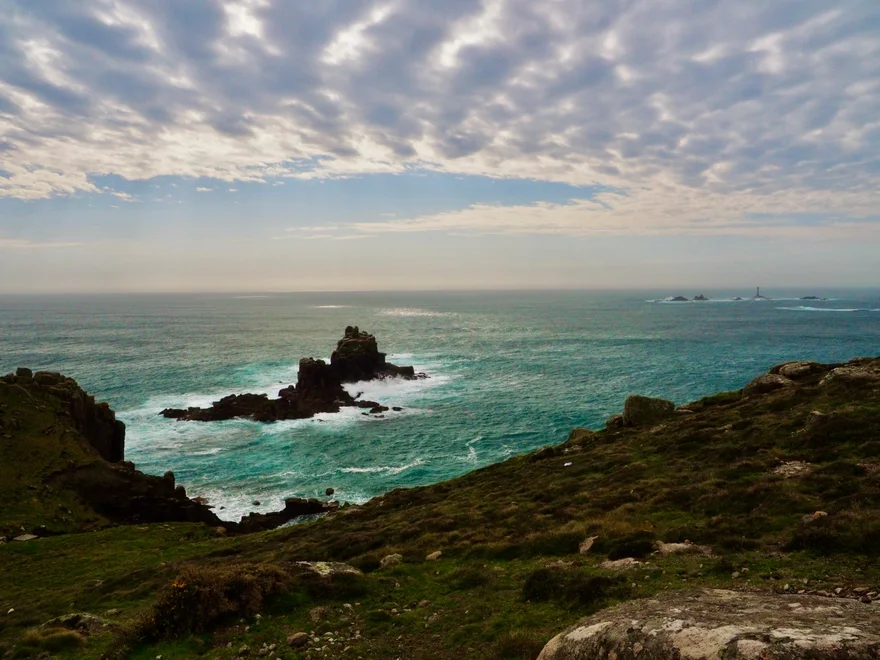
Land’s End is one of those names you know before you ever start planning a trip. The end of the land: it takes little more to conjure a picture. Individual rocks stand off the dark coast, wrapped in surf. Above them stretches a wide sky with torn clouds. Beyond the last rocks, the eye has nothing more to settle on for a while. Land’s End is the western tip of mainland England; for our trip, it is above all one of the great coastal views. It is also a distinctly touristy place: a large car park, visitor centre, restaurants, professional photographers. But a few metres away, there is only sea, rock and surf.

Rocky coastline at Land’s End with an offshore rock, turquoise water and a wide, cloudy sky.
Land’s End — beyond the last rocks, the sea remains.

Cape Cornwall

Down the narrow road to the cape

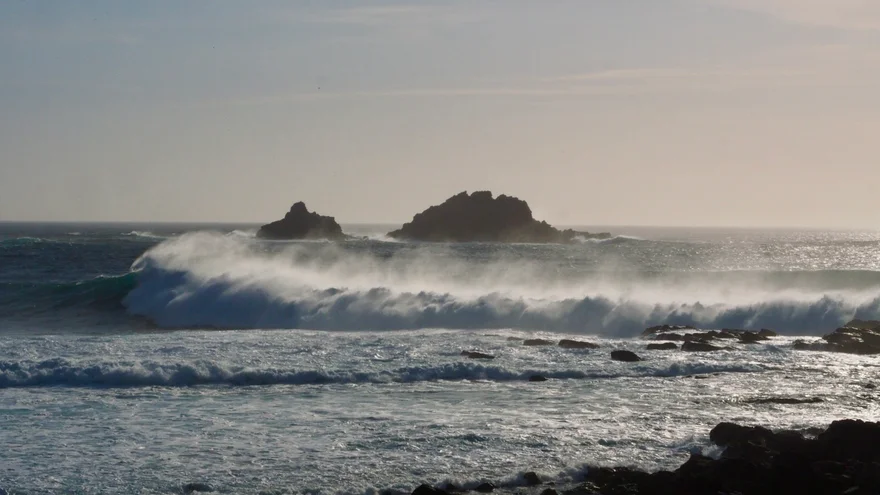
Cape Cornwall lies north of Land’s End. The drive down the single-track road to the cape is something of an adventure. In return, hardly anyone is here when we visit. Another cape, the Atlantic again — on a list, it could easily read as repetition. But the experience is always different. Here, the surf takes centre stage. Spray blows over a breaking wave, with the dark Brisons rocks behind it. Sky and water share almost the same muted colour. On the cape itself, a chimney remains as a reminder of its mining past.

Breaking waves and windblown spray in front of dark rocks in the sea at Cape Cornwall.
Cape Cornwall — surf in front of the offshore Brisons rocks.

Tintagel

Between mist and tales of knights

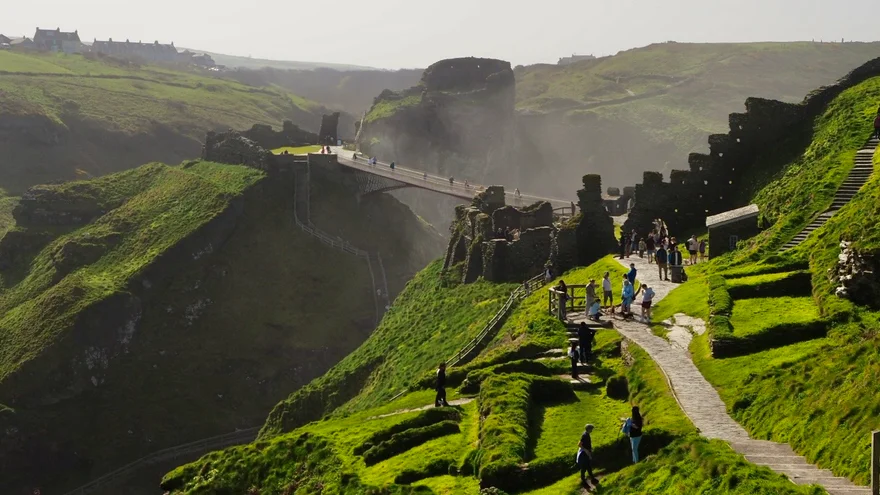
Tintagel was spectacular. We were very lucky with the weather. In the morning, wisps of mist still rose and gently wrapped the ruins. Later, the cliffs shone in the sun. Again: green grass, steep rocks, surf. And alongside it all, the almost mystical place where, according to legend, King Arthur was conceived. A narrow bridge connects the mainland with the rocky headland where the early medieval settlement and the later castle stood. That experience, combined with memories of the tales of heroes and knights from my childhood, became the starting point for our second article about this trip.

A bridge across a deep rocky cleft at Tintagel, with green slopes, remains of walls and visitors on a path.
Tintagel — across the bridge to the ruins, with a whole world of knights in mind.

Eden Project

A different vision of Cornwall

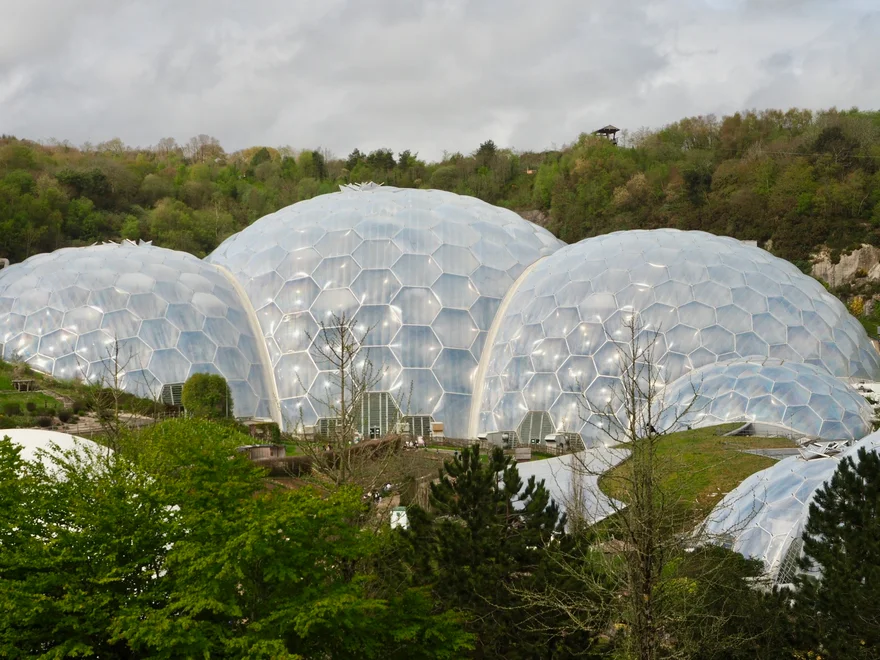
In a former china clay pit stand vast greenhouses made up of geometric panels, known as the biomes. They house, among other things, tropical rainforest and Mediterranean plant life. Our photograph shows the pale domes amid dense greenery. It is a very different view from the old houses and harbours that had occupied our thoughts before. Opened in 2001, the site explores plants and our dependence on them. Its very creation tells a story of change: a place of mineral extraction became a garden and educational project. It is busy.

The pale greenhouse domes of the Eden Project among trees and dense vegetation.
Eden Project — the biomes in a former china clay pit.

Polperro

On the map, but not visited

Polperro is on our map even though we did not go there. We had included it as a possible destination, then chose the Eden Project instead. Both would not have fitted into our schedule. Polperro promised another glimpse of Cornwall as if from a Rosamunde Pilcher film: a little harbour, tightly packed houses, narrow lanes. In other words, almost exactly the Cornwall we had pictured before the trip. Whether it would have felt that way on a walk through the village, we cannot say. Yet Polperro still belongs in this account of the journey — as the possibility we left out.

Looking back

The sea is the star

Roaring surf against the cliffs, wide beaches and harbours where boats rest on the sand at low tide. At St Michael’s Mount, the sea even reveals a path to the island. We visit very different places, yet keep turning back towards the water.

What we left for another time

We did not make it to Polperro, Trebah or Trelissick. We deliberately set aside time for the Eden Project. Even with a fixed base, not everything fits into one trip.

What stays with us

An amusement arcade in St Ives and the ruins at Tintagel occupied our thoughts for longer than we expected. One visit became a question about familiar ways of life; the other, a journey back to the stories of my childhood.