Our picture of Cornwall came from Rosamunde Pilcher. Or rather, from the romantic TV films made for German audiences under her name. Even though we had only seen one or two, the picture had stuck: a successful but frustrated executive takes a break by the coast. Barely has she arrived when she meets a handsome gardener in a flower shop. After a few not particularly dramatic misunderstandings, they fall in love. He turns out to be the heir to a country estate as grand as it is steeped in tradition, which they restore to its former glory together.
All against a backdrop of spectacular coastline and picturesque villages.
On our first walk through St Ives, where we were staying, our overwhelming impression was: old. Not charmingly retro, not quaint, not old on the outside and chic within. Not even particularly historic. Just old.
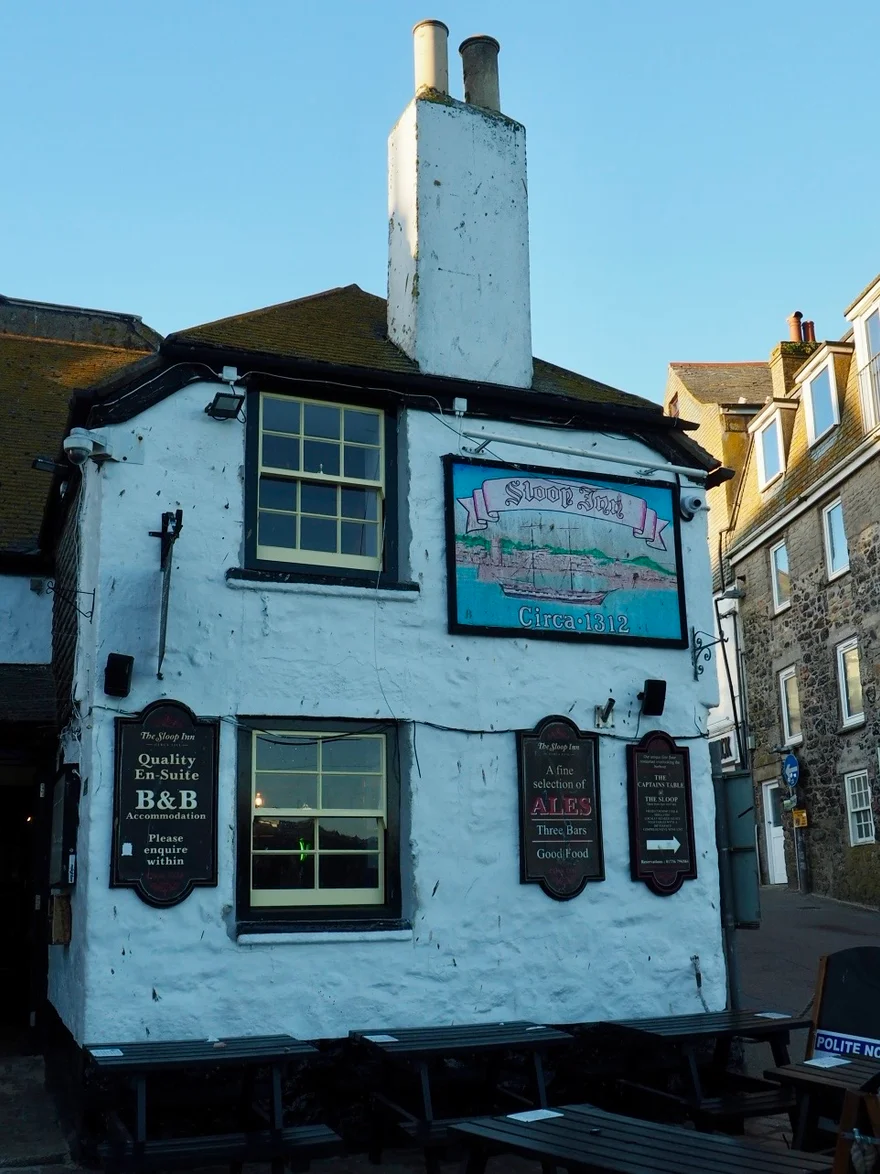
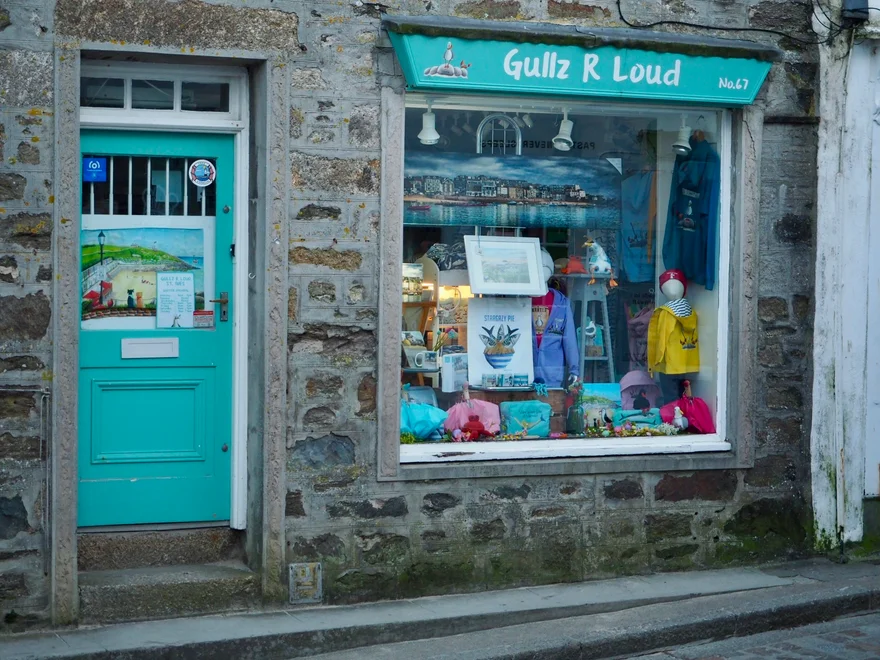
Shops selling knitted waistcoats that looked to us as though they had been made for a charity bazaar. Fish-and-chip restaurants along the harbour front whose interiors must have seen better days. Pubs and guesthouses that looked as though little had changed since they opened. All behind grey stone façades and weathered windows.
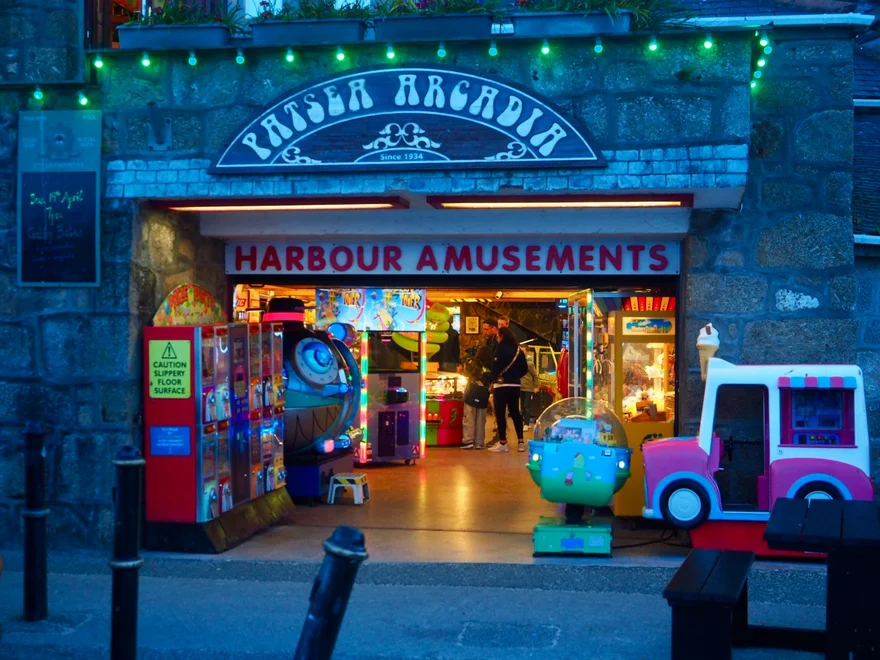
And then the Patsea Arcadia, in a prime spot on the harbour. “Harbour Amusements – Since 1934”.
Machines flashed behind the open door. Outside stood a little pink car you could sit a child in. Inside, people were playing.
Not quite what we pictured
This was hardly a place that tourism had forgotten. Elsewhere, on a waterfront like this, we would have expected branches of major fashion chains, concept stores, cafés serving matcha lattes and avocado toast. Here we saw little of that. I did spot a matcha latte sign in a back lane. It stood out enough for me to notice.
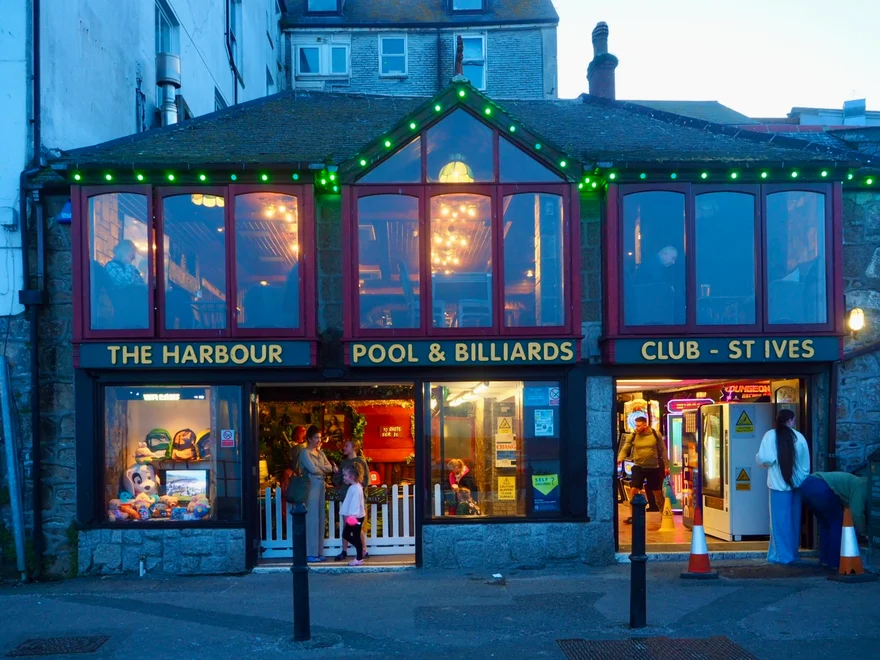
The coast was spectacular, the views of St Ives picturesque. It was up close that much of what we saw failed to match the image we had brought with us. In the Pilcher films, the old is carefully dressed for the camera. Here we were standing outside shops, restaurants and an amusement arcade going about their ordinary business.
Perhaps our sense of “old” was partly in the eye of the beholder. We seem to judge how up to date a place is by visible signs of renewal more than we had realised. A new interior, a different range of goods, a contemporary design: we read these as signs that someone is thinking about what they offer. When those signs are absent, we become doubtful.
In St Ives, they seemed less necessary.
The contrast probably struck us all the more because we had just come from London. There we had experienced a city in which something new is constantly claiming its place. St Ives harbour front looked as though all the places had been allocated decades ago.
A familiar exception: the pub
Even in the middle of London, though, there is an institution that seems to need little visible change: the pub.
Among office blocks and modern architecture, names such as “The Red Lion” hang above doors with dark wood, brass signs and upholstered benches behind them. Sometimes carpets, sometimes low ceilings. An interior that elsewhere would long since have been the subject of a refurbishment.
Here, it is part of the identity. You know what to expect, and that is one reason you come. Outside, the city changes. Inside, much is allowed to stay. Perhaps it is even supposed to.
We can understand that with a pub. With the arcade, we find it harder. Perhaps because the pub is familiar to us as a British institution, whereas we have mentally filed an arcade with machines like these under our own childhood holidays.
In St Ives, it is still there on the harbour front. Its visitors apparently need no explanation of why it still exists.
We do.
More than a holiday
We read more, looking for reasons. We find references to economic conditions, seasonal tourism and the difficulties of a place that is both somewhere to live and somewhere to go on holiday. There is also mention of an enduring “British seaside culture”.
These are possible explanations for why some things last so long. But standing outside the busy fish-and-chip restaurants, we do not feel we have quite reached the heart of it. What is on offer evidently suits what enough visitors are looking for. The arcade is being used too.
What seems outdated to us appears to be an entirely natural part of the stay for others.
In St Ives, the arcade helps define the place, along with the shops, restaurants and pubs. That reinforces our impression of having arrived somewhere in the past. Yet the people around us are spending their holidays here right now. They eat out, shop, sit wrapped up on the beach and play the machines.
Even after several days in Cornwall, the impression remains: much of what we see looks to us as though its time has passed. Yet enough people clearly find precisely this setting appealing.
And perhaps it belongs to more than the holiday. As we drive through the English countryside, we encounter this continuity again and again. What looks like the past to us often seems to be an entirely ordinary part of life here today.