01 · Greece — Four journeys. One trip.
The islands — Santorini, Naxos and Paros
We fly to Santorini, then take fast ferries via Naxos to Paros. Getting to our yoga retreat becomes an island holiday in its own right.
Santorini — a view we cannot tire of
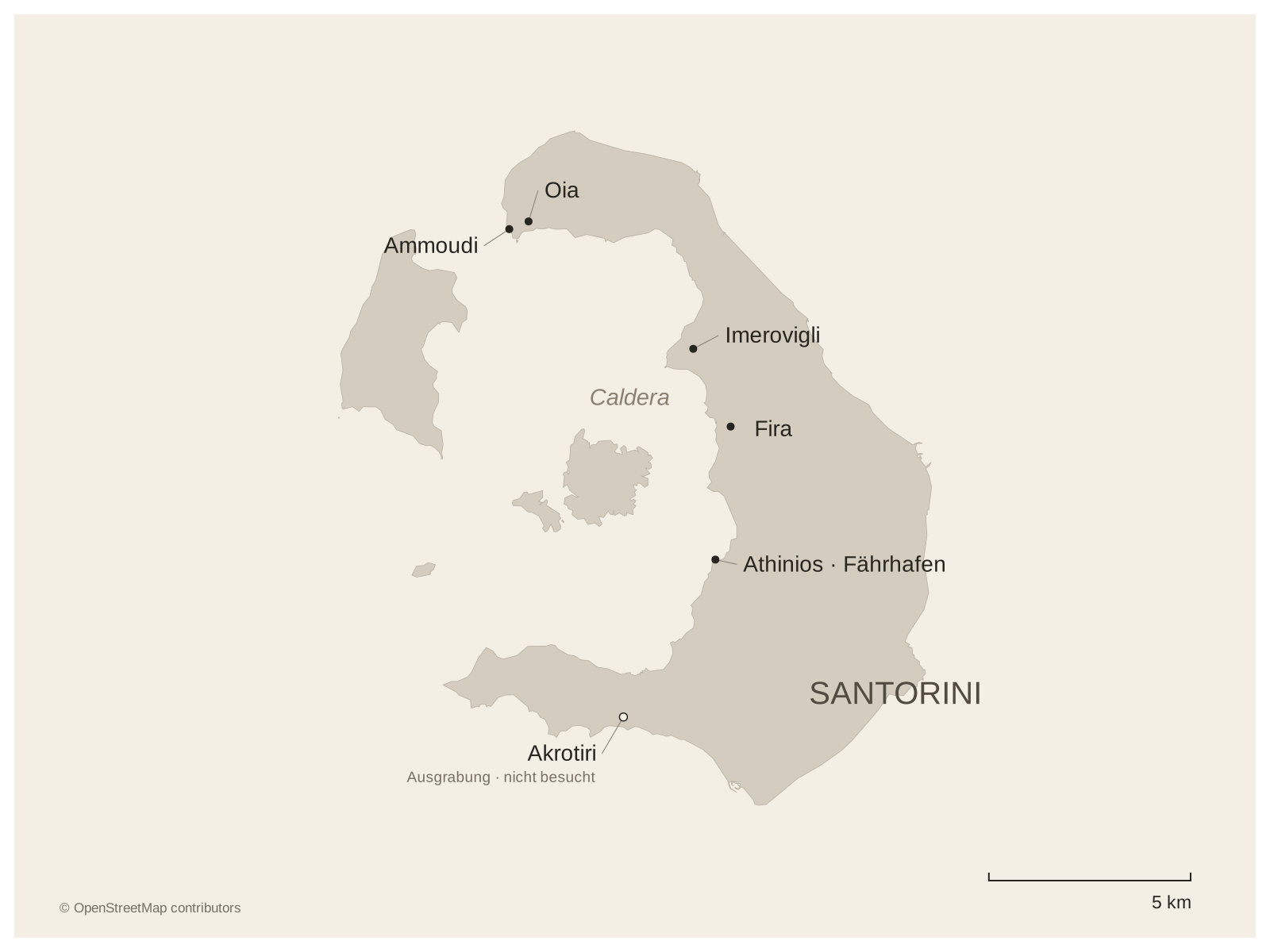
Three nights above the caldera
There is plenty to do on Santorini. We can also spend a remarkably long time looking at the same crater.
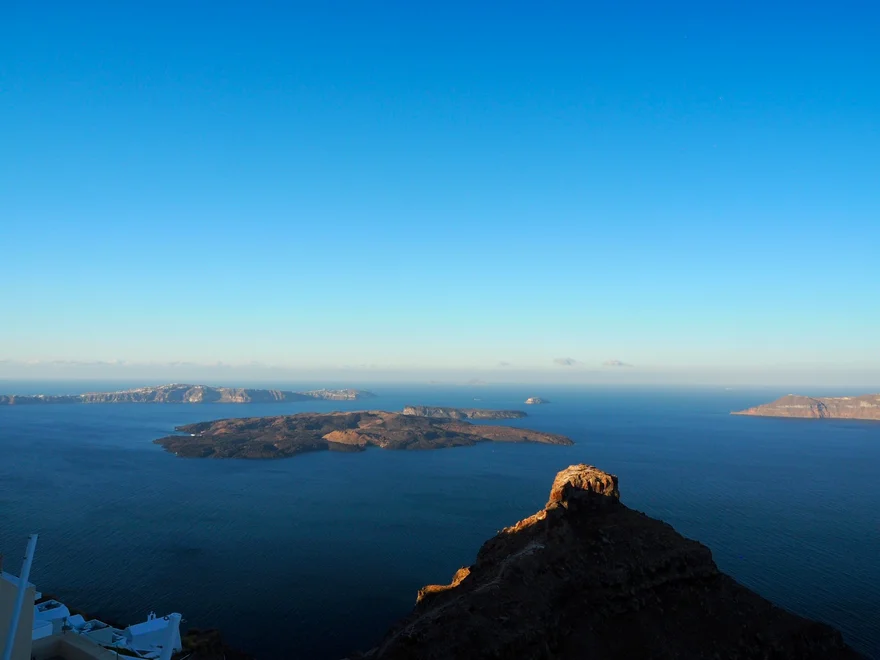
The caldera is why we come: the great expanse of water, the dark volcanic islands within it, the steep cliffs edged with white houses. We know the picture. That scarcely diminishes its impact when we are here.
We stay three nights in Imerovigli, between Fira and Oia. For us, it is the right choice. High above the water, we look across the caldera, including cruise ships that seem almost small from this distance. And we need not go anywhere else for sunset.
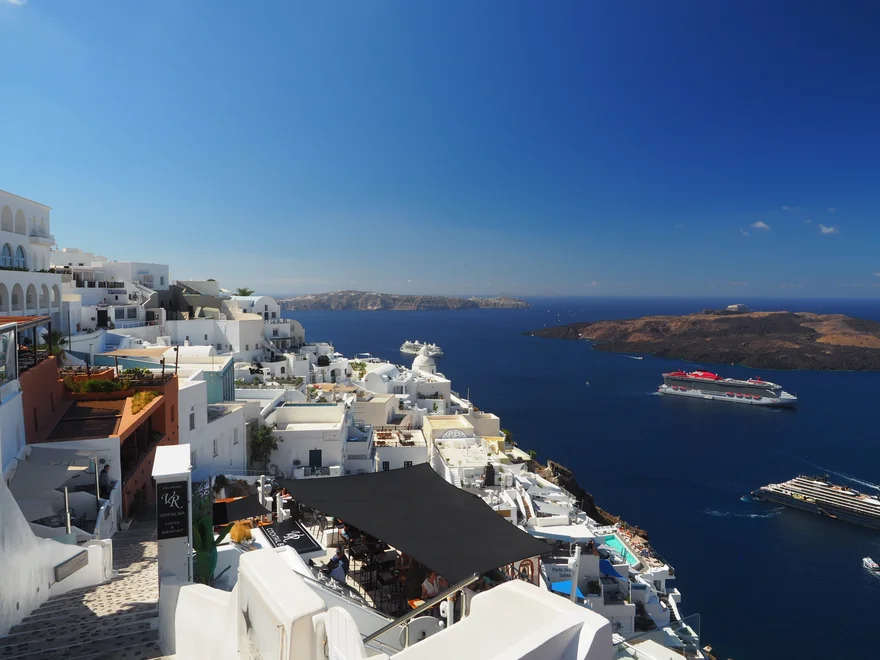
The centre is compact. Only when you look down the slope do you realise how densely it is built. Accommodation seems almost burrowed into the rock, with terraces in front and steps between. Along the caldera path, Imerovigli blends almost imperceptibly into its neighbours. Another view, another terrace, a little further still.
Santorini is expensive. We notice it in the accommodation and the food. This combination of crater, sea and Cycladic villages is unique, and priced accordingly.
Walking to Fira, taking the bus to Oia
Our outing begins along the caldera path to Fira. Out in the morning, back in the evening: those two walks alone would give our eyes a full day’s work.
Fira is as touristy as Oia, but feels different. The lanes contain a wider mix of shops and more simple restaurants. The bus station is surprisingly unremarkable for somewhere receiving so many people. Along the caldera, visitors stroll while cruise passengers arrive by cable car from below. A few streets away, someone mainly wants to know the number of the next bus to Oia.
From Fira, we take the public bus to Oia. Here are the blue domes against white houses and sea, exactly as in countless photographs. It is not hard to see why everyone wants to take that picture home. We do too.
People queue at the most sought-after viewpoints. The surprise is less the queue than its mood. It is orderly and friendly; when your turn comes, someone will help take the photograph. The narrow lanes get tight, but a short distance off the main routes, things ease. On our visit, Oia in the early afternoon feels perfectly manageable.
We wander through the lanes and along the promenade to the old castle. From here, we see houses climbing the slope, windmills and Ammoudi harbour far below. That is where we want to go.
Ammoudi — finally beside the water
On Santorini, you see the sea constantly. Surprisingly rarely do you get close to it. Usually, it lies far below you, which is much of the point.
The steps to Ammoudi change that. Starting near the castle, they lead steeply downhill. On the descent, we inevitably think about the return.
Fish restaurants line the little harbour at the bottom, beneath reddish cliffs. Beyond the restaurants, catamarans come and go. People wait for excursions or return from them. Now the boats are at eye level.
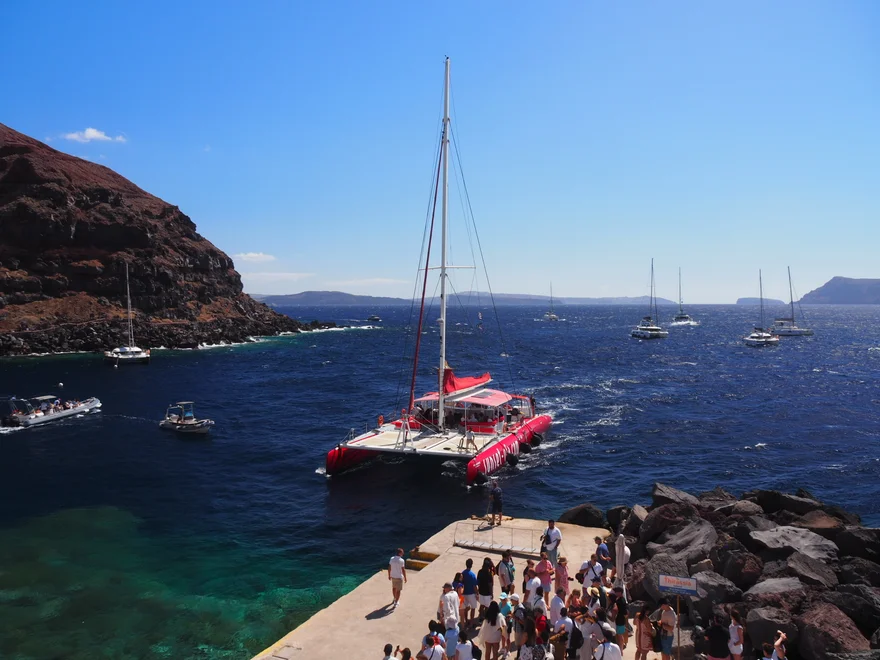
By the landing stage, there are tables in the waiting area and a stand selling takeaway coffee. A good place simply to watch what is happening. Ammoudi is one of the lovely discoveries of our stay.
And the climb back? Less alarming than it seemed on the way down.
What we leave out
We do not go to Akrotiri. In hindsight, the excavation would have been interesting, particularly alongside the many ancient sites later in our journey. When we see the frescoes from Akrotiri in Athens at the end, we think of it again.
But during our three nights on Santorini, the caldera keeps winning. We cannot get enough of the villages perched on those steep cliffs. Akrotiri remains for another time.
Naxos — two nights that feel like a holiday
Onward by ferry
At Athinios ferry port, Santorini changes its tone. The road winds down in hairpin bends. Below are buses and taxis, simple cafés and, above all, people wanting to get somewhere else.
Boarding happens quickly. Leave the luggage, go up to the passenger deck. The fast ferry makes changing islands straightforward. We see Ios from the ship during a stop; our next stay is Naxos.
Chora and the great doorway
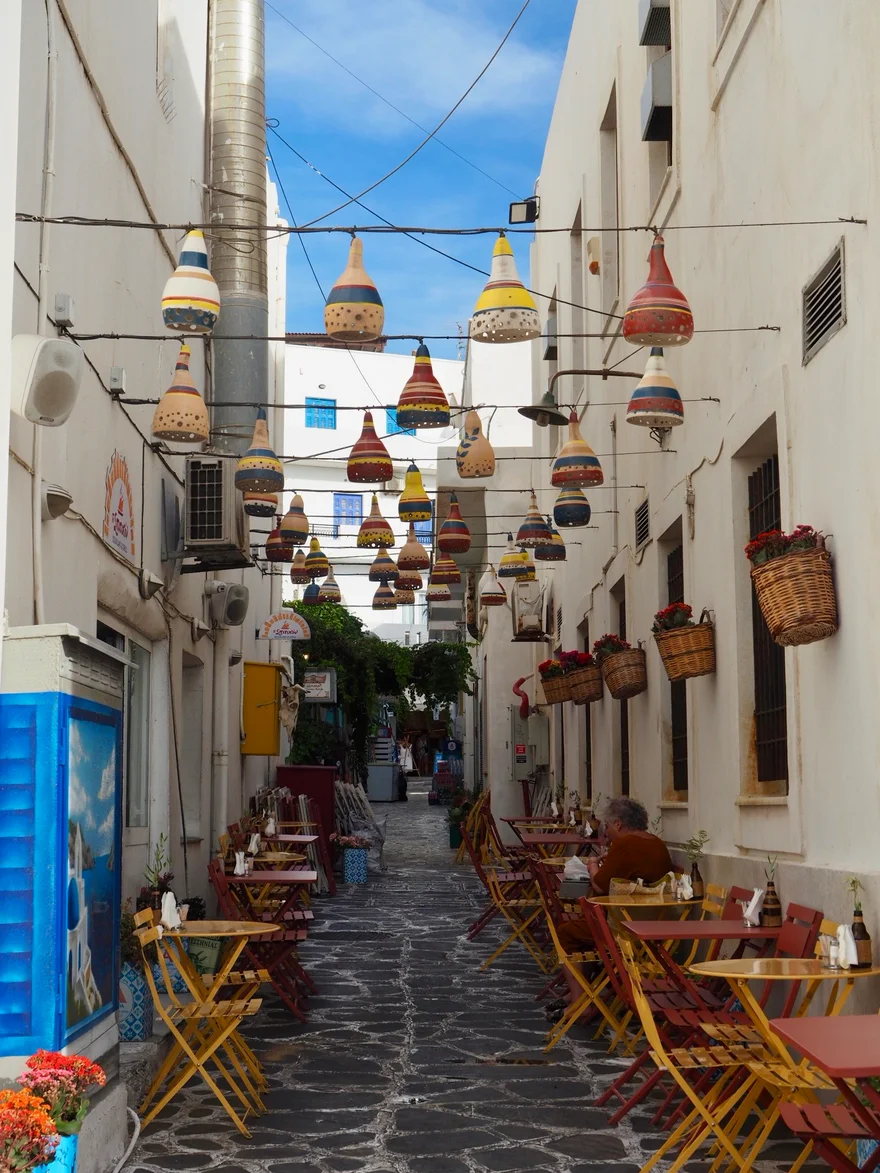
We stay two nights in Chora on Naxos. Harbour, old town and Portara are close together. Restaurants and cafés line the waterfront; behind them, lanes climb towards the Kastro quarter. Small shops, boutiques, more cafés. At the weekend, celebrations around the harbour continue late into the night.
Naxos feels more relaxed than Santorini. Tourism belongs to the town without defining our whole impression of it. We soon feel we have arrived.
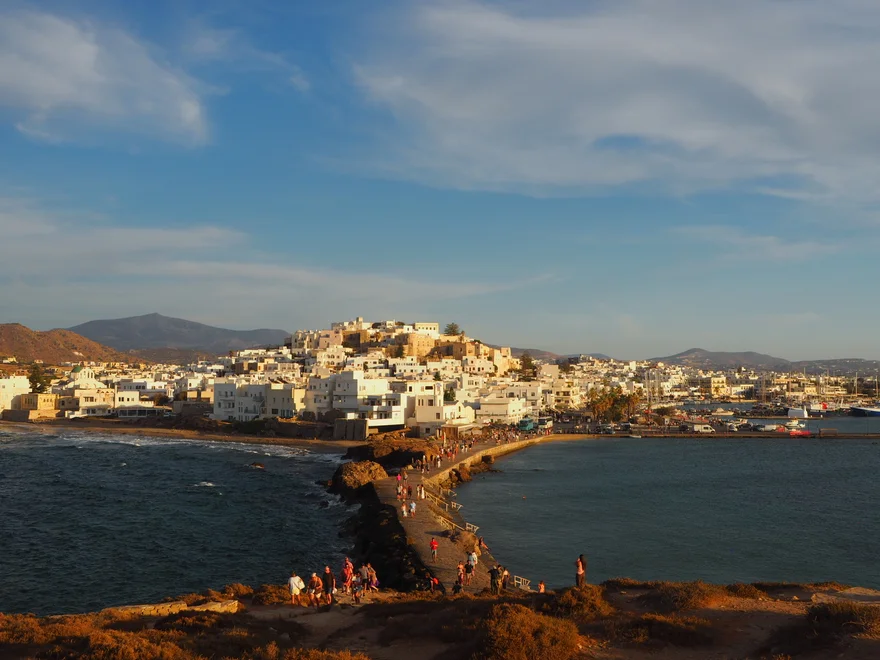
The Portara is visible as you arrive: an enormous marble doorway on the little islet linked to town by a causeway. It belonged to a Temple of Apollo begun in the sixth century BC and never completed.
At sunset, this unfinished architecture is in great demand. Ideally, the sun should sit precisely within the doorway. Only a narrow stretch beside the barrier gives that angle, and it fills up.
But you can also sit on the rocks looking towards Paros. Or turn around. Across the narrow causeway, Chora glows in the evening light. Apparently, a beautiful sunset does not always require the sun to be in the middle of your own photograph.
An afternoon at Plaka Beach
Nothing else needs to happen at Plaka Beach. A long sandy shore, turquoise water and an unhurried afternoon suit us very well.
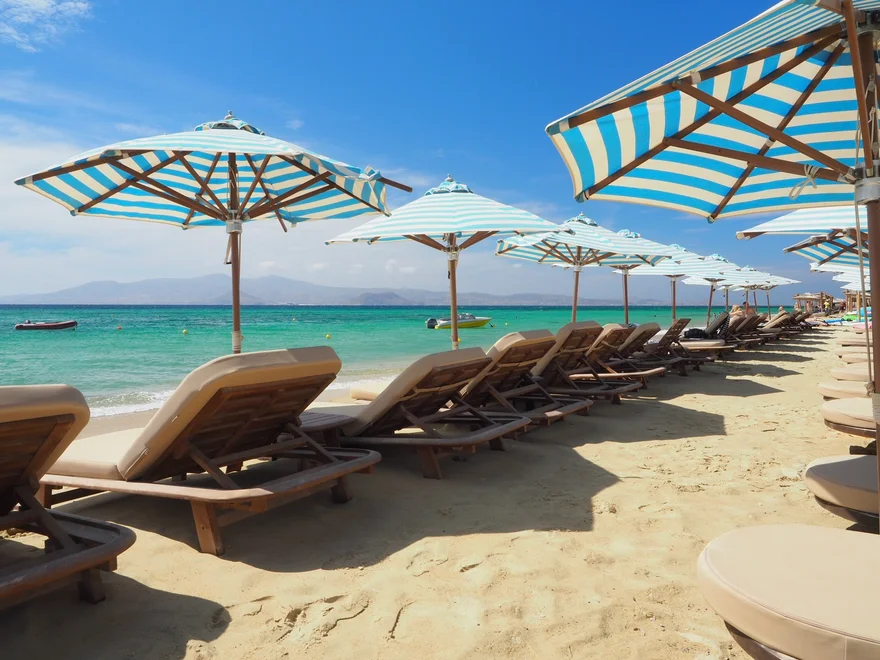
Restaurants offer loungers and parasols in return for a minimum spend. On our visit, at the stretch we choose, it is €30 in the second row and €40 by the water. That seems fair to us. Later on Paros, we see considerably higher charges just for hiring the loungers.
Paros — the pretty setting and the place we prefer
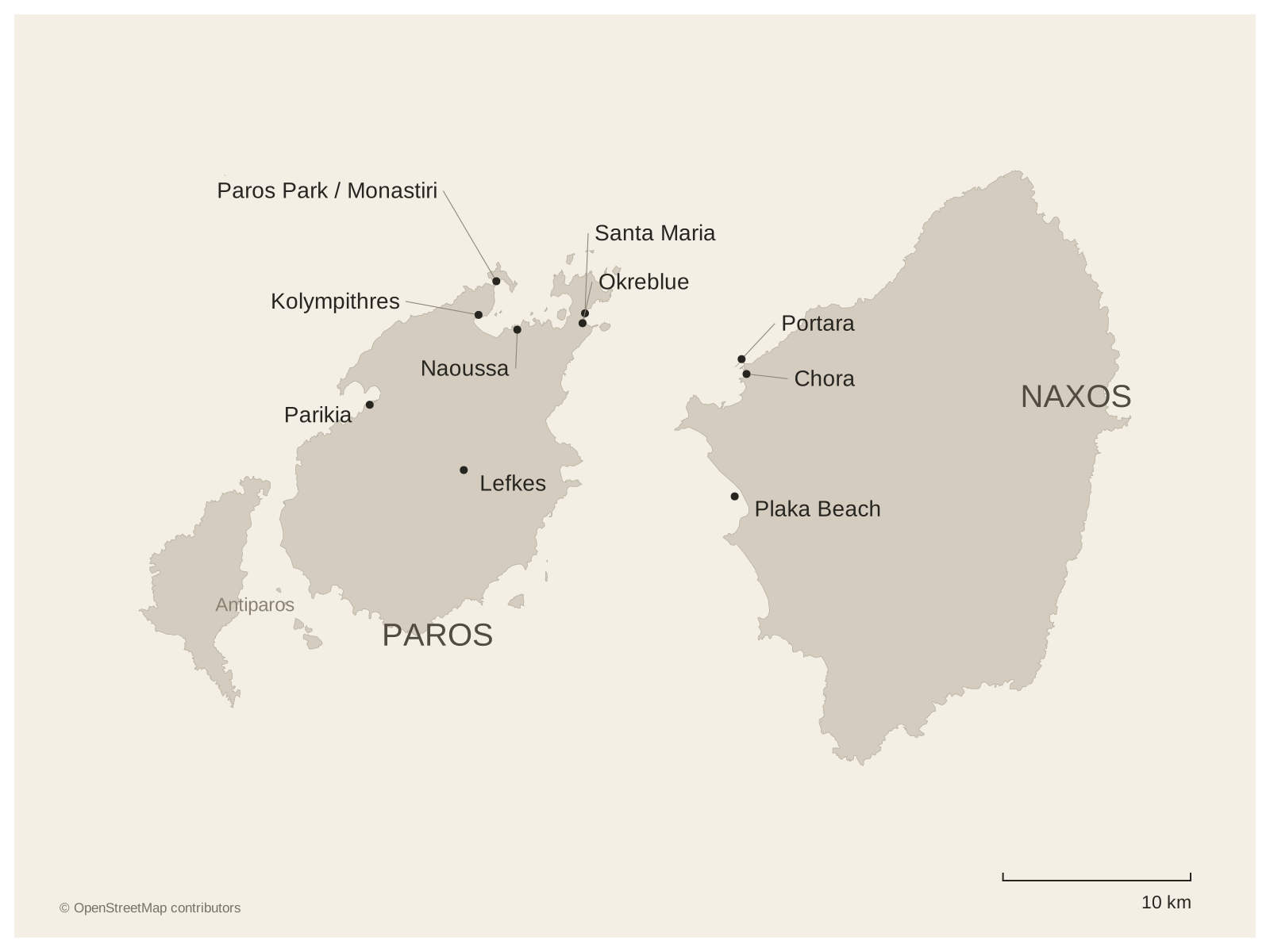
We continue by ferry to Paros and stay six nights at Okreblue Seaside Yoga Retreat Centre. Our island outings overlap with retreat week. Here we describe the places we visit; practice and retreat life have a chapter of their own.
Parts of Paros are distinctly polished. Smart boutiques, restaurants and beach clubs, often with prices to match. There are also small harbours, mountain villages and paths along rocky coasts. We find much to admire, but not everything draws us equally.
Naoussa — lovely to look at
Naoussa’s harbour basin seems almost embedded in the town. Tavernas and fish restaurants surround it; the remains of the Venetian fortress stand beyond. Bougainvillea hangs over white lanes, with glimpses of water between houses. The large church rises above it all.
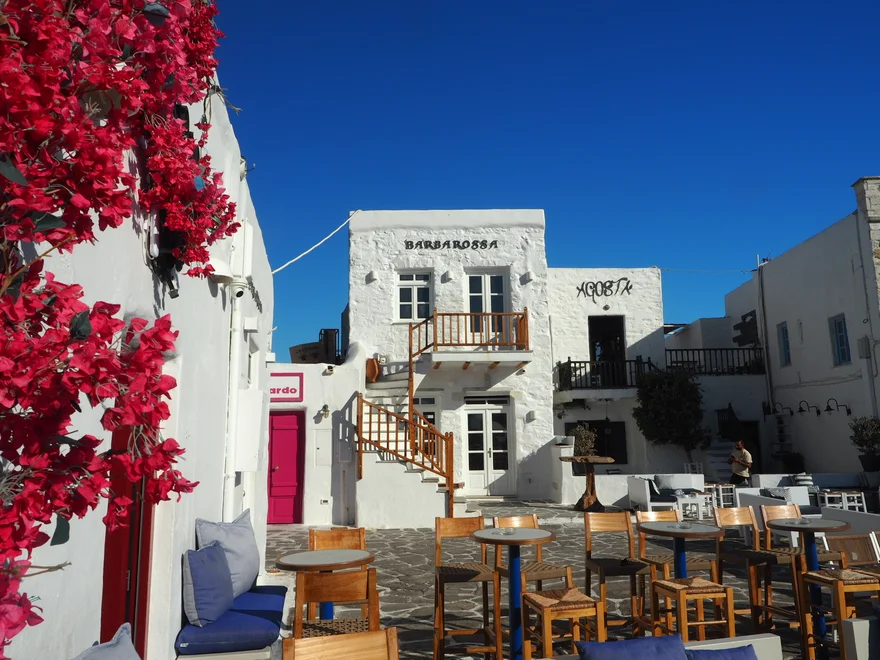
Naoussa is enchanting. And, to us, a little aloof. The boutiques are a shade too smart to tempt us inside; the townscape a touch too perfect. We enjoy looking. The place where we would rather linger is elsewhere.
Parikia — somewhere to stay a while
Parikia is our favourite place on Paros. In our eyes, being the ferry port does it good. People wait in cafés for departures, search for their bus or eat before continuing their journey. The town has practical work to do as well.
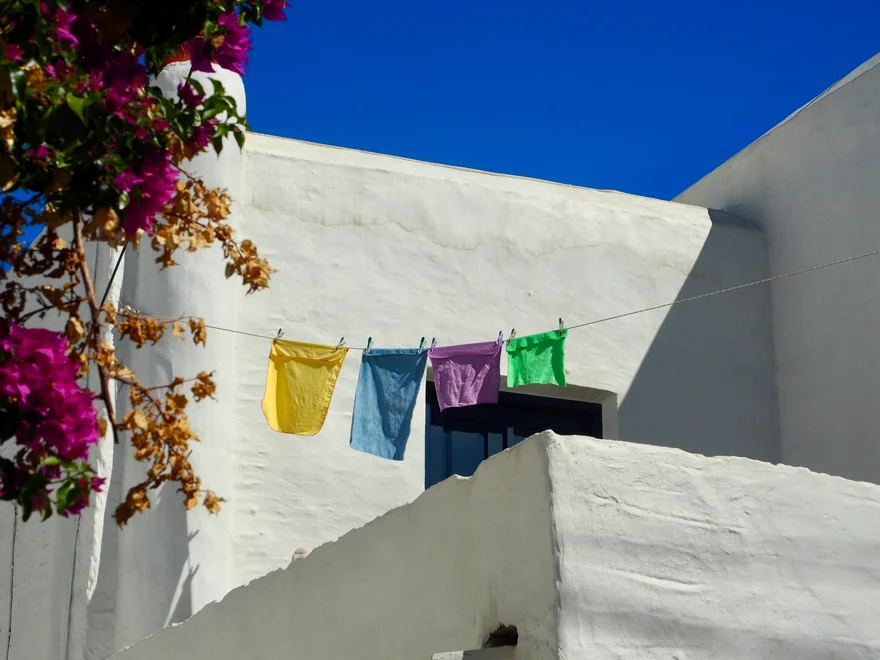
Alongside that, Parikia has everything we enjoy in island towns: an old centre to wander through, small boutiques, tavernas and cafés. On the promenade, you sit right by the sea. There is a lovely view by the chapel of Agios Konstantinos. It feels accessible and alive.
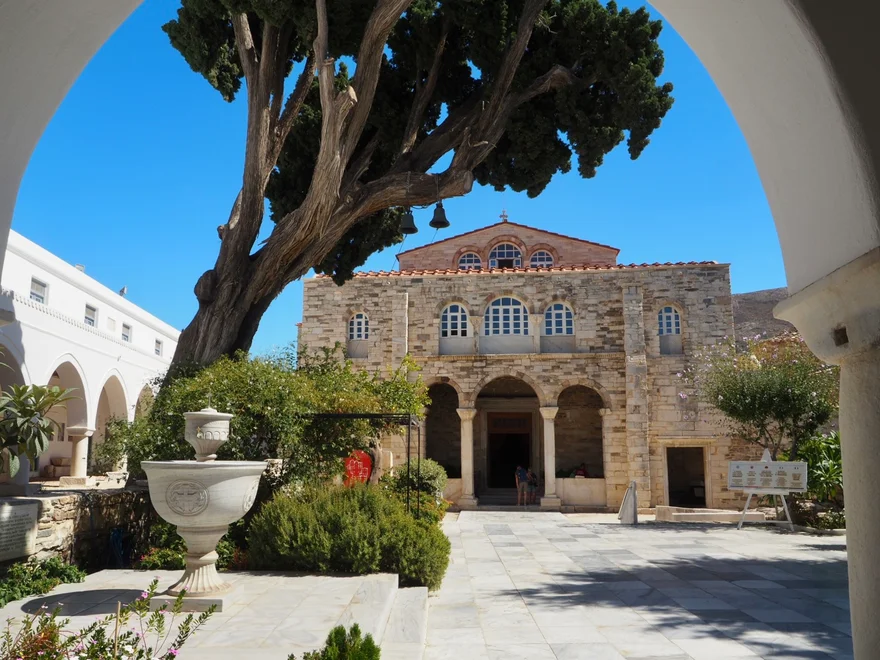
Near the harbour is Panagia Ekatontapiliani, an early Christian and Byzantine church complex. Even its courtyard and church give our walk a different focus. Among the white island houses, suddenly there are these old stone walls and domes.
Lefkes — a mountain village worth the journey
We have driven to a few “picturesque mountain villages” and afterwards wondered whether they justified the trip. Lefkes does not fall into that category for us.
It is easy to reach and offers enough for an enjoyable hour or two: white houses on the hillside, narrow lanes paved with stone and marble, bougainvillea, small shops. In the centre, you walk.
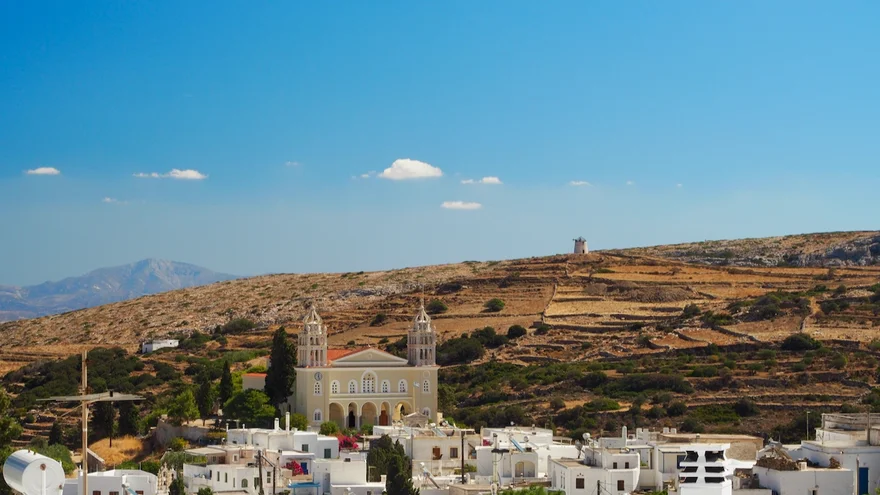
From cafés on the opposite slope, you look across the village and the church of Agia Triada. A pleasing combination: first walking through the lanes, then sitting back and looking at where you have just been.
Rocks, coves and loungers
Paros Park begins at Monastiri Beach. The sheltered bay below the white monastery of Agios Ioannis Detis is beautiful, its water shimmering green. The beach has a beach-club atmosphere, including prices that make us look twice: €80 for two loungers and a parasol.
The park offers other possibilities. Paths lead across the rocky peninsula, past coves and out to a lighthouse. The juxtaposition of serviced beach and open coastal landscape alone makes this corner interesting.
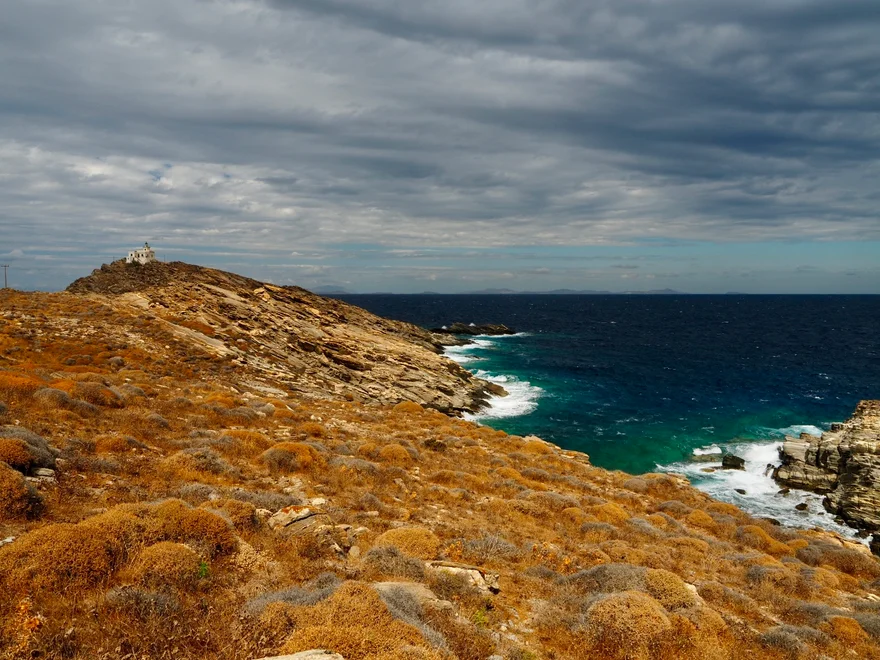
A little further on is Kolympithres. Much is written about its rock formations: unique, spectacular, a moonscape. We see attractive granite rocks with small sandy coves between them. Many are occupied by loungers and parasols.
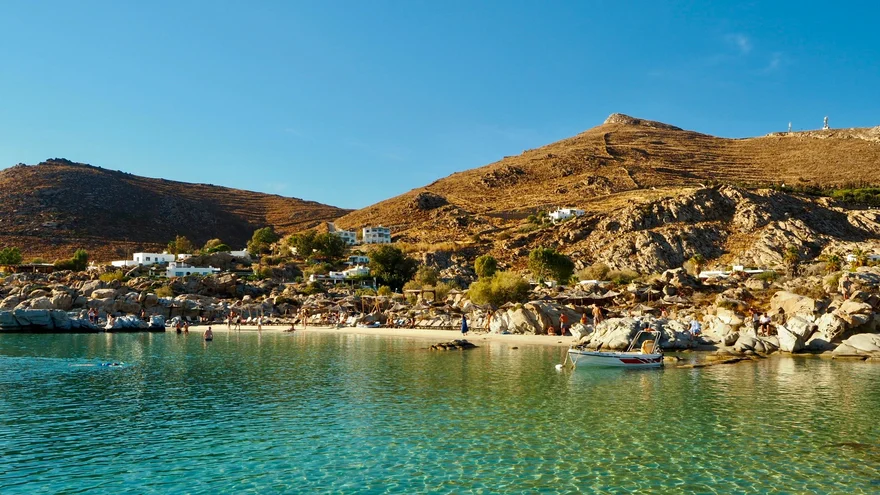
We like it, but do not quite share the rapture. We do not stay long. Naxos gave us our long beach afternoon; during the retreat, we find a spot by the sea closer to our accommodation.
One island still missing
Looking back, we would have liked to add two nights on Mykonos after Paros. We went there on one of our first trips together. We would have been interested to see how memory and the place itself still fitted together.
This time, it remains a thought. We fly from Paros to Athens and continue on the mainland.